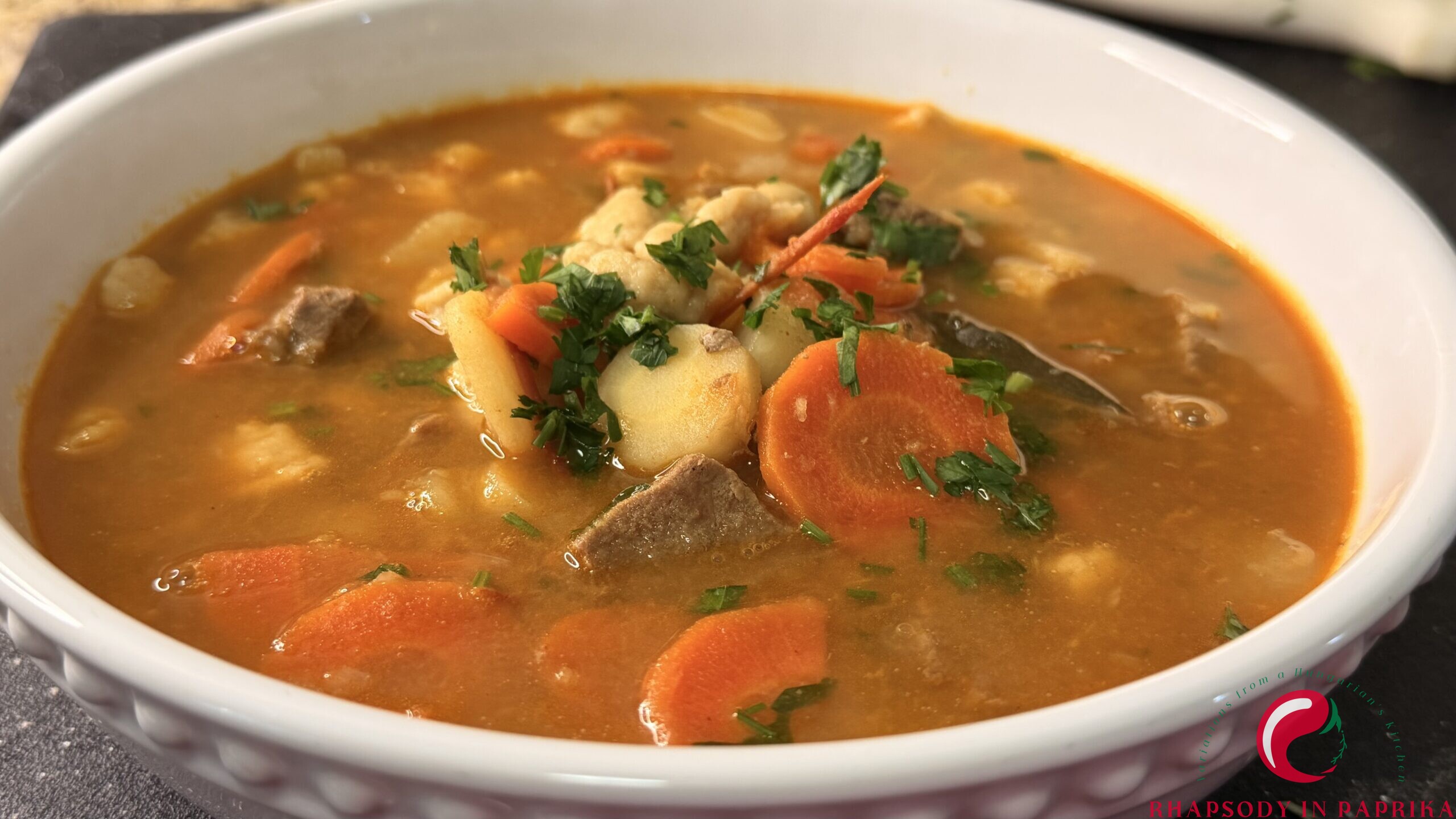
A bowl of Hungary
There are some dishes that need no introduction in a Hungarian kitchen. Gulyás is one of them.
When I was a child, our extended family would gather at my aunt and uncle’s house for a summer party. With my mother having five siblings, these gatherings could get rather large. There were always plenty of cousins to keep us busy while the adults settled into their familiar roles.
The men would build a fire and keep it going, while the women prepared all the ingredients for the goulash. I loved watching it all come together, but what I remember most is the smell—the wood smoke drifting through the yard, mingling with the unmistakable aroma of onions, paprika, and beef slowly cooking over the fire in the kettle.
While the goulash simmered away, everyone gathered around the table. My uncle would bring out the wine and the pálinka he was so proud to make himself, and the conversations would begin. Stories were shared, old ones retold, new ones added, and there was always plenty of laughter.
Eventually, dinner was served, but the stories didn’t stop. They carried on well into the evening, around the table and beside the dying fire. Finally, the children began to tire, the flames burned down to embers, and the mosquitoes started their evening assault—sending everyone indoors.
Those long summer evenings are what I think of when I make goulash. For me, it is more than a pot of beef, paprika, and vegetables. It is the smell of a fire, a crowded table, family stories, and the feeling that there was nowhere else we needed to be.
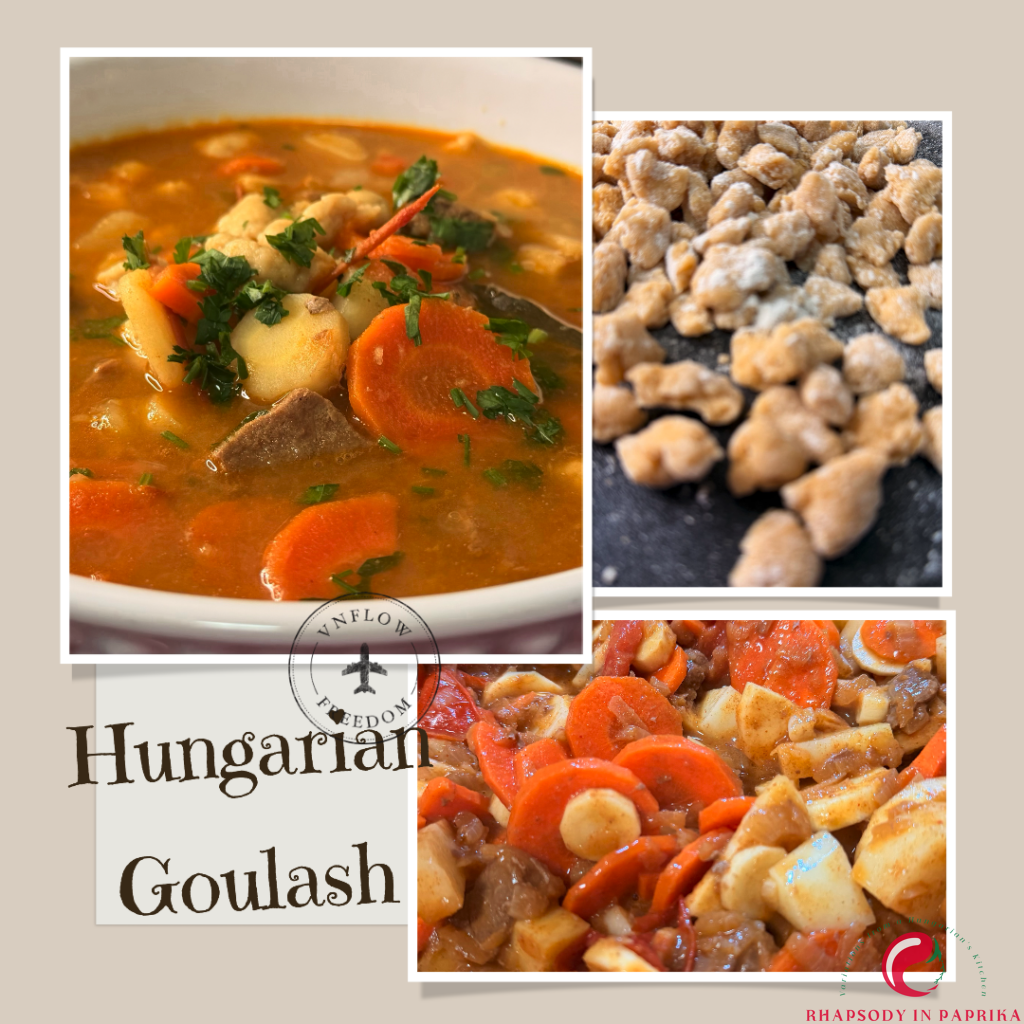
I also want to introduce you to csipetke. The word literally means ‘tiny pinched noodles.’ They are about as simple as pasta gets: flour, egg, a little salt, and your fingers. You pinch off little pieces of dough and drop them directly into the bubbling goulash. They are rustic, uneven, and absolutely the right thing for this soup.
This variation of goulash is a tiny bit different from the recipes you see elsewhere. My variation comes from my mother’ suggestion to add half a grated of potato into the soup. And oh my word! It made the goulash thick, and stewy that is even better to dunk with that fresh sourdough bread.
This is my version of a traditional Hungarian gulyás: rich with paprika and beef, full of vegetables, and finished with little bites of homemade csipetke.
History
Traditional gulyás is particularly tied to the Alföld, the vast flat region of eastern and central Hungary. It has deep connections to the herdsmen and cattle-raising culture of the Hungarian puszta (plains).
That connection is actually where the name gulyás comes from: gulyás originally referred to a cattle herder (gulyás), and the dish was associated with the food cooked by herdsmen outdoors over a fire, often in a bogrács, the traditional Hungarian cauldron.
This makes bogrács gulyás especially evocative of the Alföld and the puszta.
Best beef for Hungarian gulyás
My first choice would be beef chuck (chuck roast).
It has enough connective tissue and marbling to become wonderfully tender during the long, gentle simmering. It also has more flavor than a lean cut.
Good options:
- Beef chuck roast — best choice
- Beef shank — excellent and very traditional; adds wonderful richness, especially if bone-in
- Beef shoulder/clod — good alternative to chuck
- Beef stew meat — convenient, but chuck that you cube yourself is usually better
I would not use tenderloin, sirloin, or other expensive lean steaks. They’re better suited to quick cooking, while gulyás benefits from the slow transformation of a tougher cut.
I’d cut the chuck into roughly 1-inch cubes. That size gives you substantial pieces of beef that stay recognizable after simmering. My recommendation for Rhapsody in Paprika: 1½–2 lb beef chuck, depending on whether you want the finished gulyás to lean more toward a vegetable-rich soup or a meatier, heartier version.
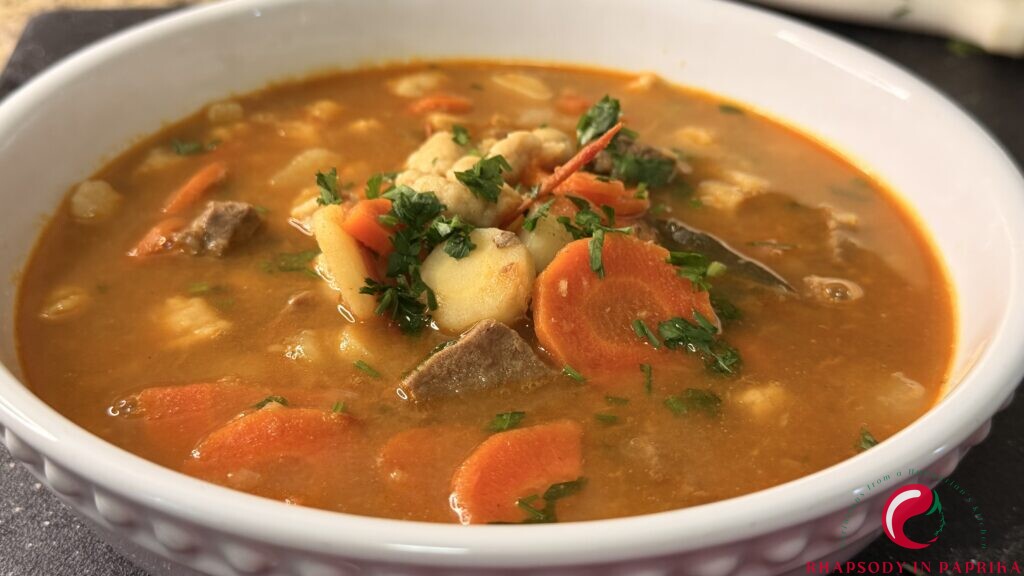

Hungarian Goulash / Magyar Gulyásleves
Description
There are some dishes that need no introduction in a Hungarian kitchen. Gulyás is one of them.
This variation of goulash is a tiny bit different from the recipes you see elsewhere. My variation comes from my mother' suggestion to add half a grated of potato into the soup. And oh my word! It made the goulash thick, and stewy that is even better to dunk with that fresh sourdough bread.
This is my version of a traditional Hungarian gulyás: rich with paprika and beef, full of vegetables, and finished with little bites of homemade csipetke.
Ingredients
Gulyás Soup
Csipetke (pinched pasta)
Instructions
-
Prepare the base
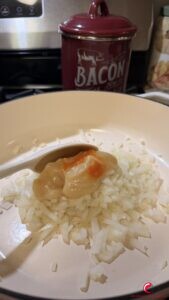 Heat the lard or oil in a large heavy-bottomed pot or Dutch oven over medium heat.
Add the finely chopped onions and cook slowly until they become soft and translucent. Don't rush this step. The onions are one of the foundations of the dish, and giving them time to soften brings out their sweetness. Do not brown them.
Remove the pot from the heat for a moment and stir in the Hungarian sweet paprika.
This little pause matters. Paprika can become bitter if it is fried over high heat, so I like to take the pot off the burner before adding it and stir it into the warm onions and fat.
Add a small splash of water and stir to create a rich paprika-coated base.
-
Add the beef
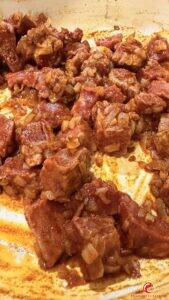 Return the pot to low-medium heat and add the cubed beef.
Stir well so the meat is coated in the paprika and onion mixture.
Add the minced garlic, caraway seeds, salt, and black pepper. Cook for several minutes, stirring occasionally, until the beef begins to take on some color and the kitchen starts smelling unmistakably Hungarian.
Add enough water or beef stock to just cover the meat.
Cover the pot and let it simmer gently for approximately 60–75 minutes, stirring occasionally.
-
Add the vegetables
Add the carrots, parsnip, celery, sliced tomatoes, and green pepper. Also add half a grated potato.
Add the cubed potatoes a little later if you prefer them to hold their shape particularly well.
Pour in enough additional water or stock to make a thick, hearty soup rather than a dry stew.
Cover and continue simmering for another 30–45 minutes, or until the beef is tender and the vegetables are cooked through.
The exact cooking time will depend on the cut of beef. Goulash is not a dish that rewards rushing. Let the beef become completely tender at its own pace.
Taste and adjust the salt and paprika if needed.
-
Make the Csipetke
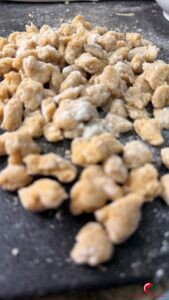 Csipetke literally means something along the lines of “pinched”, which is exactly what you do with the dough.
There is no need to make perfectly shaped noodles here. In fact, the irregular little pieces are part of their charm.
Make the dough
In a small bowl, combine:
- 1 large egg
- ¾–1 cup all-purpose flour
- ¼ teaspoon salt
Mix until a firm, slightly stiff dough forms.
You want the dough considerably firmer than a typical pancake or dumpling batter. If it feels sticky, add a little more flour.
Knead it briefly until smooth, then let it rest for about 10–15 minutes.
Pinch the noodles
Pinch off tiny pieces of dough with your fingers—roughly the size of a small pea.
You don't need to roll them or make them perfectly uniform. Drop the little pieces onto a lightly floured plate or directly into the simmering goulash.
If making a large batch, work fairly quickly so the pieces don't stick together.
Cook the csipetke
When the goulash is nearly finished, bring it to a gentle simmer.
Drop the csipetke into the pot one at a time, stirring gently after adding a handful so they don't clump together.
Cook for approximately 8-10 minutes, depending on their size.
The csipetke will puff slightly and become tender as they cook.
-
Bring it all together
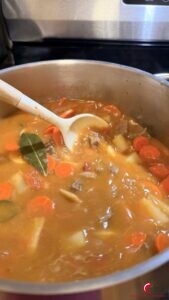 Once the beef is tender and the vegetables are cooked, add the csipetke if you haven't already done so.
Let everything simmer together for a few more minutes.
The finished goulash should be somewhere between a soup and a stew—brothy enough to eat with a spoon, but substantial enough that every bowl is full of beef, vegetables, potatoes, and those wonderful little pinched noodles.
Taste one last time and adjust the seasoning.
I like to let the goulash rest for 10–15 minutes before serving. It gives the flavors a chance to settle and the broth to come together.
-
Serve
Ladle the goulash into deep bowls and serve it hot. Drizzle some fresh parsley on top.
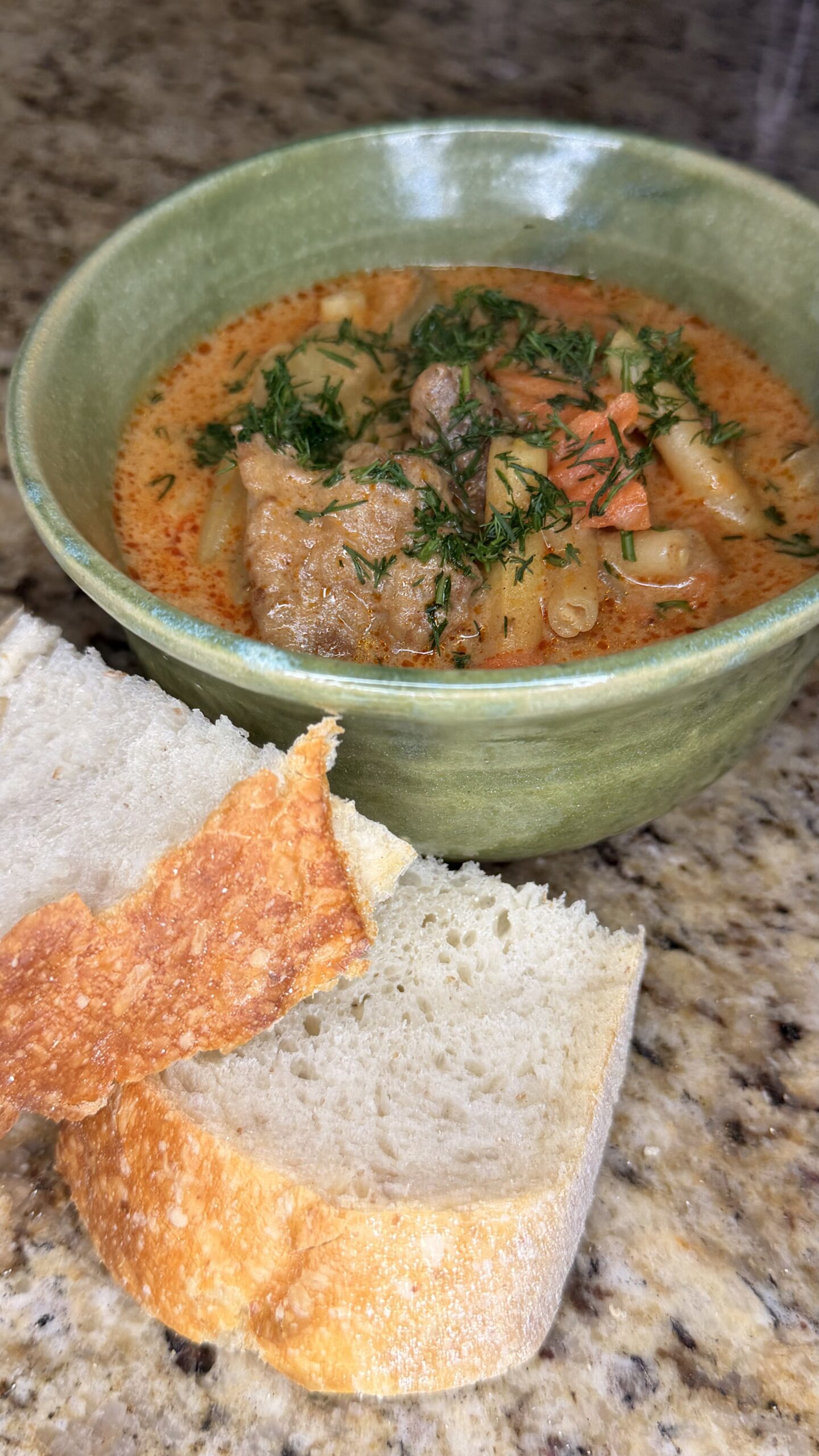
A slice of good crusty bread is always welcome for chasing the last bit of paprika-rich broth around the bowl.
And if you have made enough for tomorrow, even better. Like many Hungarian one-pot dishes, goulash is one of those meals that seems to become even more flavorful after a night in the refrigerator.
Jó étvágyat! — Good appetite!