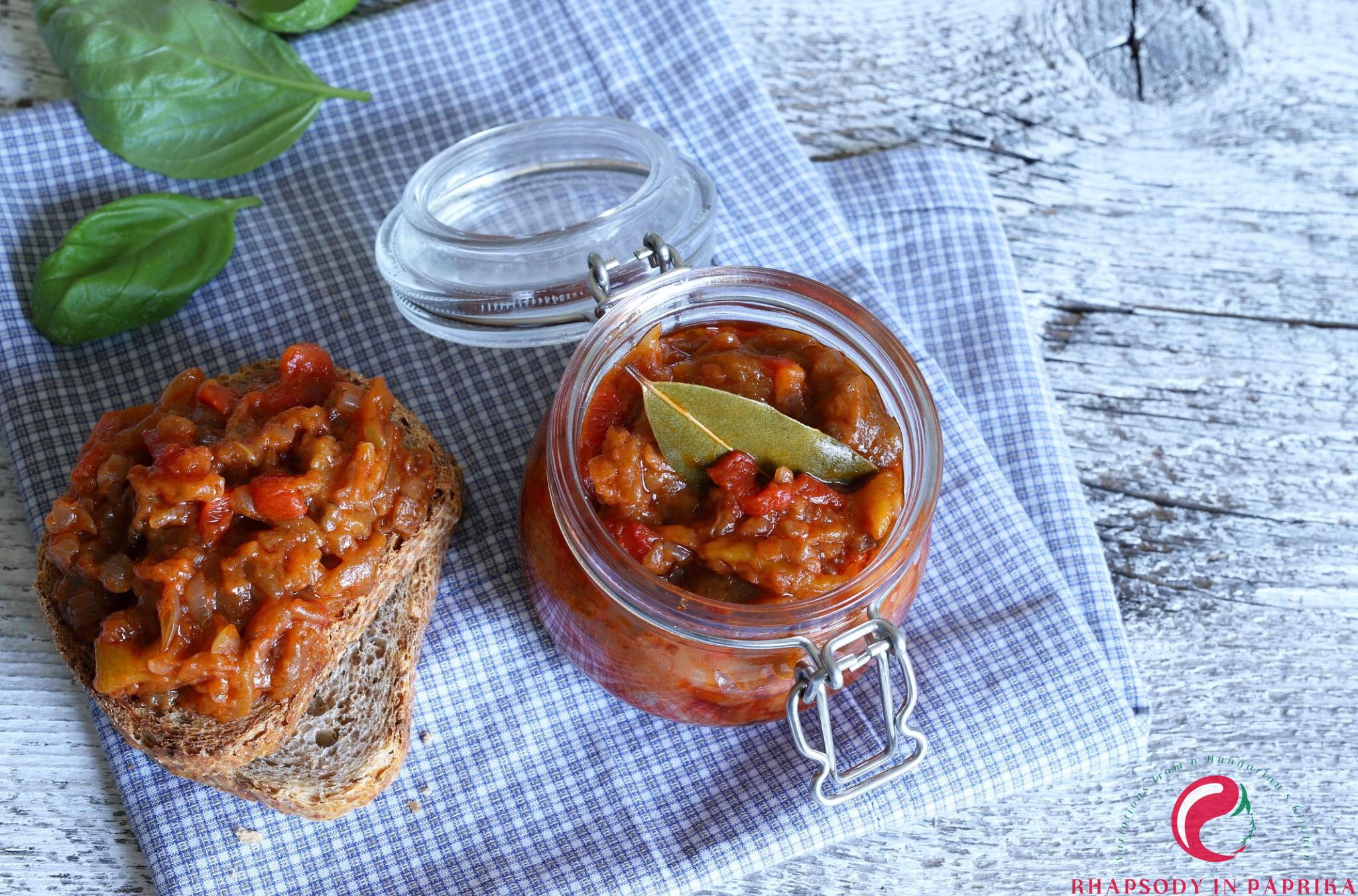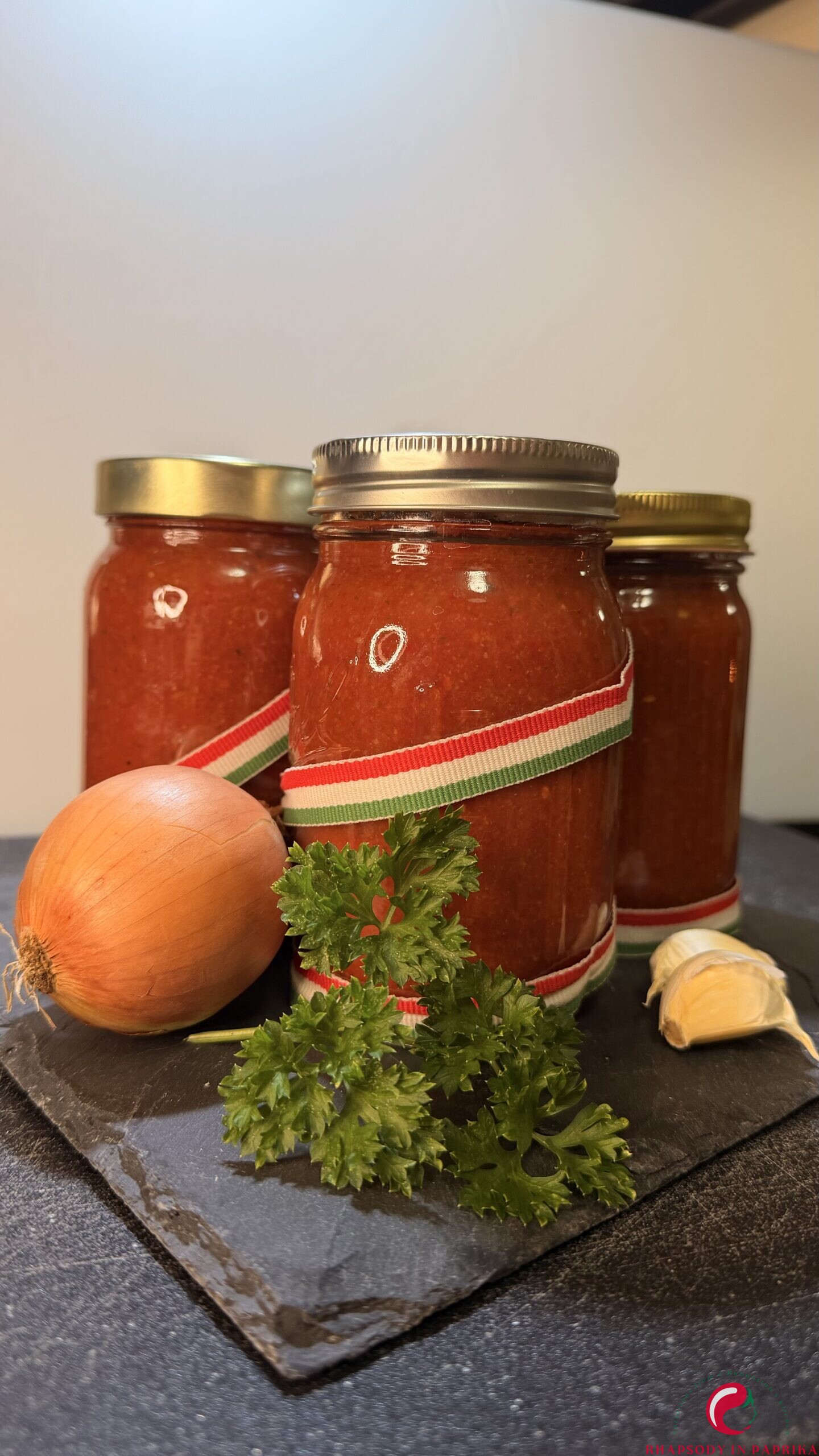
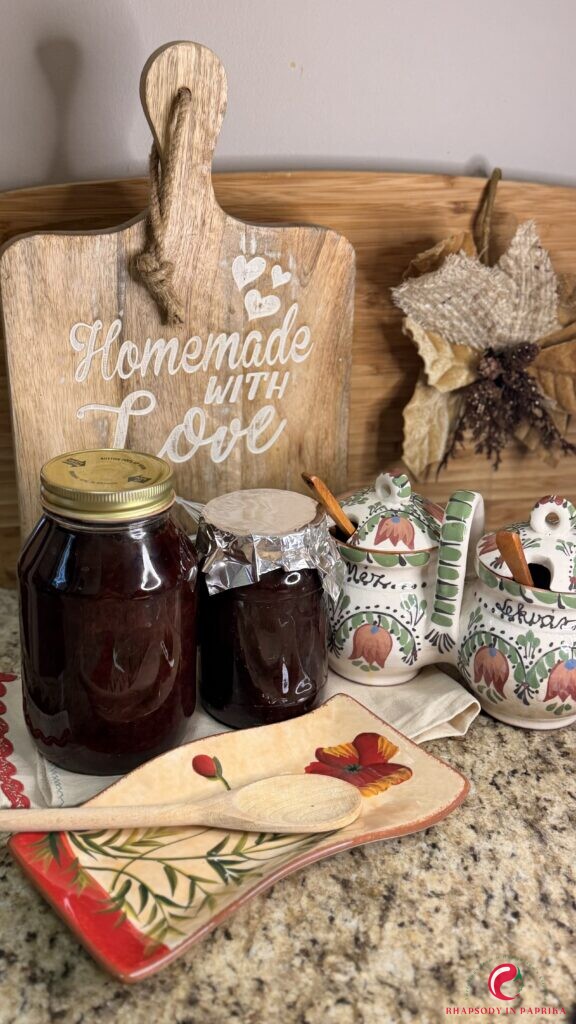
In Hungary, plum jam—szilvalekvár—has been made for generations, particularly in the villages and rural households where plums were among the most dependable fruits of the late summer harvest. It was a food born as much from necessity as from tradition: when the plum trees were heavy with fruit, families had to find a way to preserve the harvest before it spoiled.
One of the plums most closely associated with this tradition is the Besztercei szilva, a small, dark-blue European plum with an intense sweet-tart flavor. Unlike many modern dessert plums, it is not especially watery, and when cooked slowly its natural sugars concentrate into a deep, rich preserve.
Traditionally, making szilvalekvár was a communal affair. In some villages, families would gather around a large copper or enamel kettle and cook enormous quantities of plums over a wood fire. The fruit was stirred for hours—sometimes nearly all day—until the water evaporated and the plums transformed into a thick, dark, intensely flavored paste.
What makes the old-fashioned Hungarian plum jam particularly remarkable is how little is needed. Plums, time, and patience. Traditional versions could be made with little or even no added sugar when the fruit was naturally sweet enough. The long cooking concentrated the fruit rather than masking it with sugar.
There was also something wonderfully practical about the process. The finished lekvár could be stored through the cold months and used in all sorts of ways: spread on bread, spooned into pastries, folded into lekváros bukta, or used to fill szilvás gombóc—the famous Hungarian plum dumplings. A jar of plum jam was, in a sense, a little piece of summer put away for January.
The tradition also reflects something characteristic of old Hungarian cooking: making the most of what the land provides. A bumper crop of plums was not something to waste. The fruit was cooked down until it became almost entirely concentrated plum—dark, fragrant, tart, sweet, and remarkably long-lasting.
There is something almost meditative about making it this way today. Instead of rushing the fruit with lots of sugar or commercial pectin, the oven does the slow work. The plums soften, release their juices, and gradually collapse. Water disappears, the sugars concentrate, and the sharpness of the fruit becomes rounder and deeper.
And that is perhaps the nicest thing about Hungarian plum lekvár: it tastes like the fruit itself, only more so.
A good spoonful should remind you that somewhere, not too long ago, a Hungarian kitchen was full of the smell of ripe plums, the harvest was being gathered, and someone was patiently stirring a great pot so that the taste of August could survive all the way into winter.
The Plum Jam of My Childhood
I remember very little about my father’s grandmother. She passed away when I was six or seven, but some of my earliest memories of childhood are connected to her.
When I was three, four, maybe five years old, I had a strong bond with her. She would often come to our house to take care of me while my mom and dad were at school. I don’t remember the conversations we had or all the things we did together. What remains are small fragments—little impressions that somehow stayed with me long after the details were gone.
One of those memories is connected to plum jam.
Every winter, my mom would open her ‘pantry’ cabinet in our small apartment on the 9th floor of an 80s era block house, and bring out jars of the plum jam my grandmother had made in the village of Noszvaj, during the summer. The jam was nothing like the bright, sweet artificially flavored jams you might find on a grocery-store shelf. It was thick and dark, almost black, like tar, and intensely concentrated. The plums had been cooked down until there was almost nothing left but the essence of the fruit.
It was sweet, but not simply sweet. There was a deep plum flavor, a little tartness, and something almost mysterious about it. It tasted like summer that had been patiently locked away for winter.
I loved it.
I would sometimes eat it straight from the jar, taking a spoonful, eat it like a lollipop. There was no bread, no butter, no pastry needed. Just a spoon and that dark, sticky plum jam.
My mom, of course, had more practical ideas for it. She used it in all kinds of recipes, turning that precious jar of summer into pastries, fillings, and desserts. The same jam that I considered a child’s candy was an ingredient that connected the kitchen to generations before me.
As I got older, I didn’t think much about those jars. They were simply part of winter, part of our kitchen, part of being a child.
But memories have a funny way of waiting for us.
Now, when I think about that plum jam, I realize that I wasn’t only tasting fruit. I was tasting something my family had been making for generations—a way of preserving the harvest, but also a way of preserving a piece of summer.
The plums would be picked when they were ripe, cooked slowly, and reduced until they became dark, thick, and intensely sweet. No need for much sugar. No need to hurry. Just good plums and time.
And somewhere in that process was something else that couldn’t be put into a jar: the hands that made it, the kitchen where it was cooked, and the people who were there before me.
I don’t remember my great-grandmother very well anymore.
But I remember her sweet face, the feeling of being little and having her there.
And I remember her plum jam.
Sometimes I think that may be what family recipes really are. Not just instructions for making food, but little containers for memories. Years later, you open the jar, take a spoonful, and for a moment, you are five years old again.
The best American substitutes for Besztercei
Let’s look at specifically what makes Besztercei (Besztercei szilva) distinctive rather than simply looking for “a plum good for jam.”
Besztercei is small, elongated, dark blue, freestone, aromatic, and notably high in both sugar and acidity. It’s particularly prized for processing because its flavor becomes exceptionally intense when cooked.
Stanley
Stanley is a European prune plum, dark blue with firm yellow-green flesh, and it’s specifically used for preserving, drying and cooking. It’s also widely grown in the US.
It’s not identical to Besztercei, but it has the European prune-plum character that you want rather than the very juicy, soft character of many Japanese plums.
5 lb Stanley → 0–200 g sugar – If the Stanley are properly ripe, I’d lean toward little or no sugar initially.
Italian Prune Plum
This may actually be the closest practical substitute in appearance and cooking behavior.
Italian plum is a dark-purple European plum with yellow flesh, freestone, and specifically suited to cooking, preserving and drying.
There’s an interesting bit of US horticultural history here: the University of Connecticut notes that Italian Plum was replaced in the eastern US by the hardier Stanley, which helps explain why Stanley is often easier to find.
So if you see Italian Prune Plums at a farmers market, I’d grab them.

Hungarian Plum Jam / Szilva Lekvár
Description
In Hungary, plum jam—szilvalekvár—has been made for generations, particularly in the villages and rural households where plums were among the most dependable fruits of the late summer harvest. It was a food born as much from necessity as from tradition: when the plum trees were heavy with fruit, families had to find a way to preserve the harvest before it spoiled.
One of the plums most closely associated with this tradition is the Besztercei szilva, a small, dark-blue European plum with an intense sweet-tart flavor. Unlike many modern dessert plums, it is not especially watery, and when cooked slowly its natural sugars concentrate into a deep, rich preserve.
Ingredients
Instructions
-
- Heat oven to 180°F / 82°C.
- Put the halved plums in a heavy roasting pan or Dutch oven.
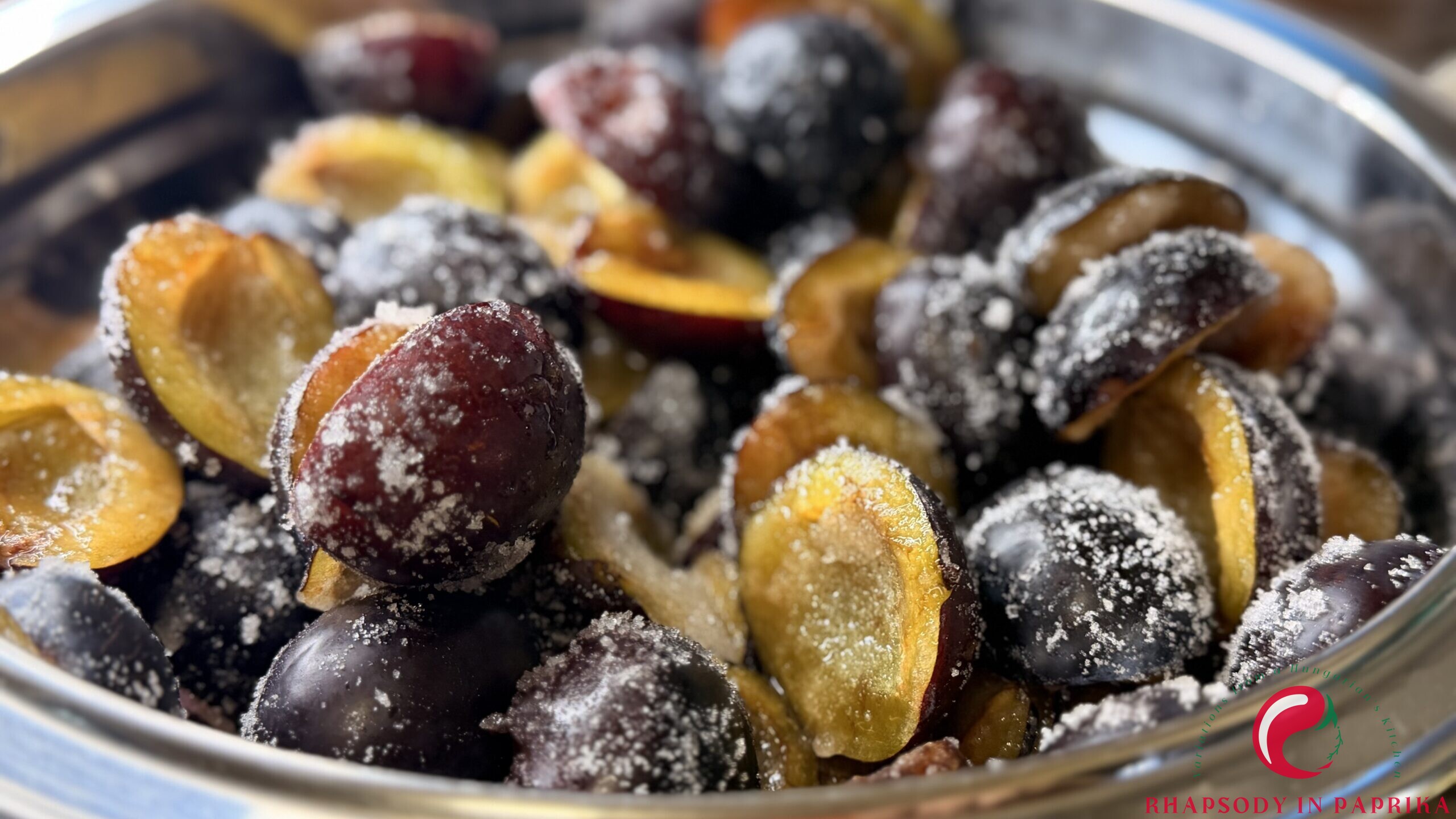
- Taste the raw fruit. If it’s nicely ripe and sweet-tart, I’d actually start with no sugar. If it’s noticeably sour or underripe, add 200 g sugar.
- Cover very tightly with aluminum foil.
- Bake for 2 hours.
- Remove the foil carefully and stir thoroughly, breaking up the softened fruit.
- If there are still substantial pieces that haven’t collapsed, cover again and return to the oven.
- Continue baking until the fruit is completely broken down and has become thick and jammy.
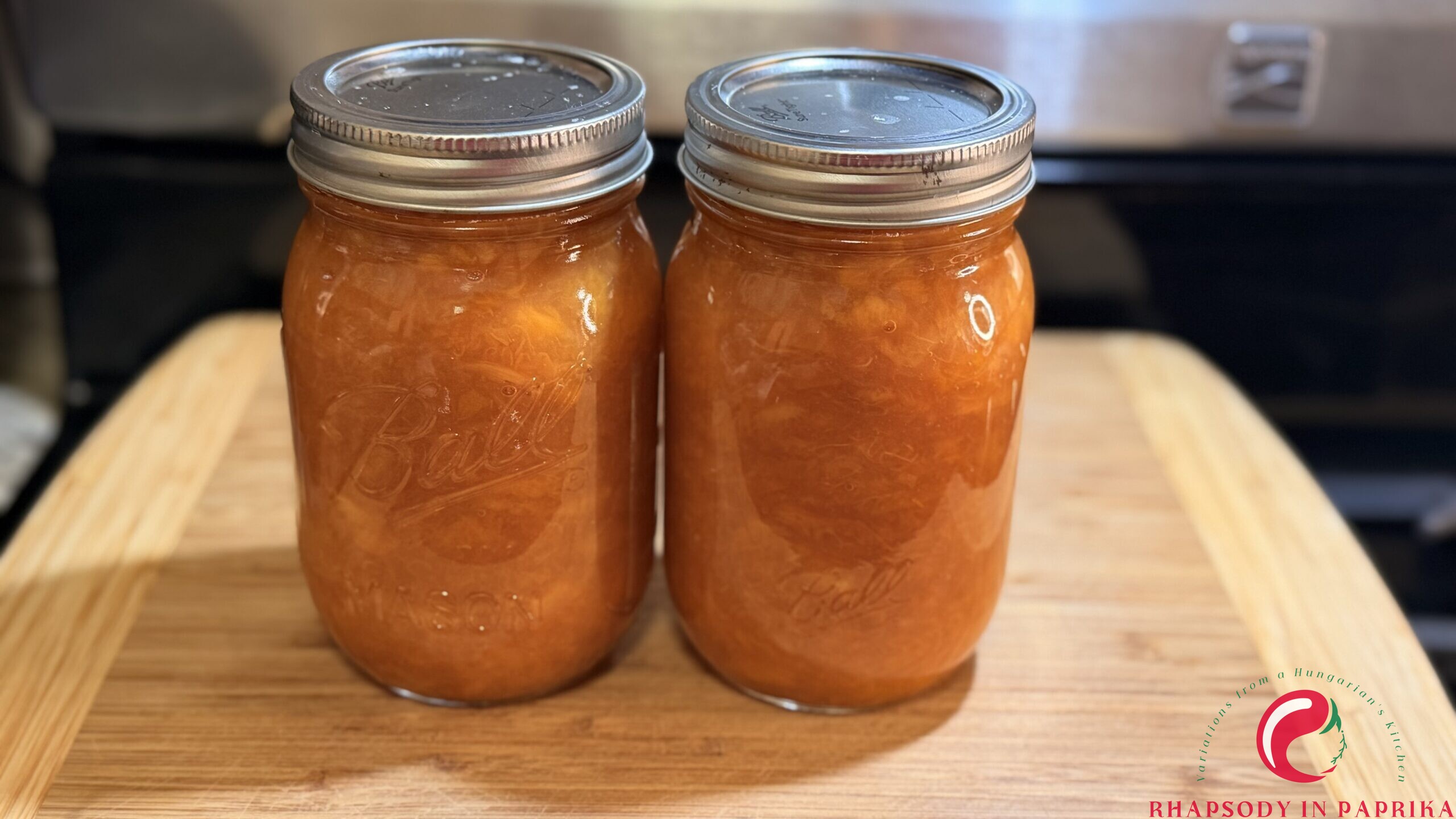
- Fill it into mason jars while piping hot. Seal tight.
And don’t judge the final thickness while it’s screaming hot — it will thicken considerably as it cools.