
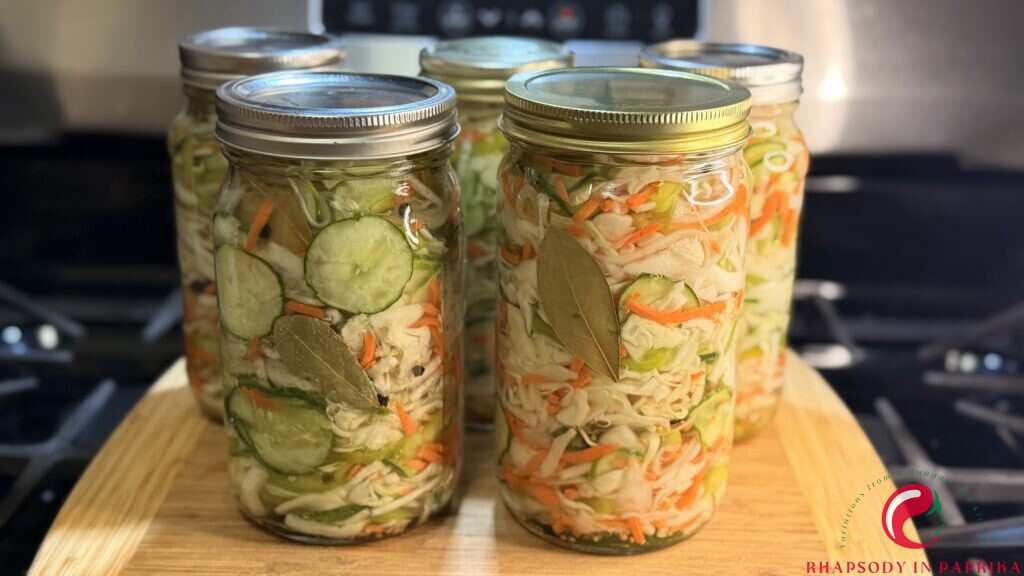
The queen of canned food
Csalamádé is one of those foods that immediately brings back memories of Hungarian kitchens, pantries, and family meals. A jar of colorful pickled vegetables was almost always welcome on the table, especially alongside rich Hungarian dishes.
I remember, as a young girl, how my mother and I would get up early on Saturday mornings late in the season to visit the market and buy the vegetables we needed for preserving. We would look for fresh cucumbers, peppers, and cabbage, while the onions often came from the weekend garden that my family maintained on the outskirts of town.
The bustling market was always an experience. There were people everywhere, vendors calling out to customers, tables overflowing with vegetables, and the familiar sounds and smells of the season. For me, those early mornings were about much more than buying ingredients. They were part of the rhythm of life in Hungary, marking the time of year when families began preparing foods to enjoy during the colder months.
Unlike a simple cucumber pickle, csalamádé is a mixture of vegetables—typically cabbage, peppers, cucumbers, onions, and carrots—preserved in a sweet and tangy vinegar brine. Every family has its own version, and the exact combination of vegetables can vary from household to household.
For me, the beauty of csalamádé lies in its simplicity. The vegetables remain colorful and pleasantly crisp, while the brine creates that unmistakable balance of sweetness, acidity, and saltiness that pairs so beautifully with hearty Hungarian food.
In Hungary, csalamádé is served alongside just about every main meal containing meat. Whether the meal includes a rich pörkölt (stew), fried meat, sausage, or another hearty dish, the bright, tangy vegetables provide a refreshing contrast to the richness of the meal. The acidity helps cut through the richness of meat dishes and makes them feel lighter and more refreshing.
This recipe makes about 4 jars of csalamádé. A few things to consider to make it shelf stable:
The finished product must have a safe acidity level, generally pH 4.6 or below, to prevent the growth of Clostridium botulinum.
That means:
The acidity is the critical safety factor.
Use proper:
The jars must seal correctly during processing.
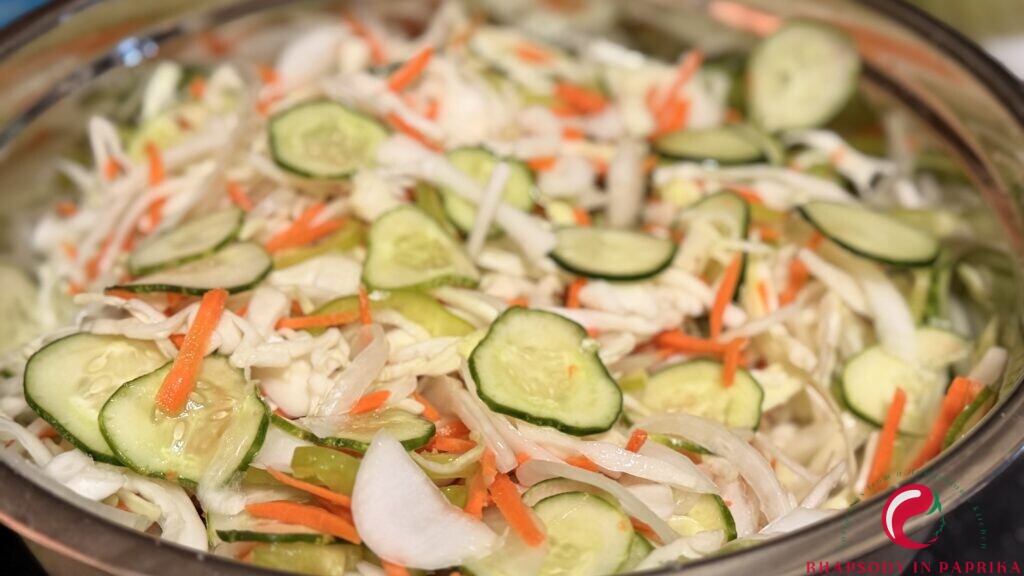
Unlike a simple cucumber pickle, csalamádé is a mixture of vegetables—typically cabbage, peppers, cucumbers, onions, and carrots—preserved in a sweet and tangy vinegar brine. Every family has its own version, and the exact combination of vegetables can vary from household to household.
For me, the beauty of csalamádé lies in its simplicity. The vegetables remain colorful and pleasantly crisp, while the brine creates that unmistakable balance of sweetness, acidity, and saltiness that pairs so beautifully with hearty Hungarian food.
In Hungary, csalamádé is served alongside just about every main meal containing meat. Whether the meal includes a rich pörkölt, fried meat, sausage, or another hearty dish, the bright, tangy vegetables provide a refreshing contrast to the richness of the meal. The acidity helps cut through the richness of meat dishes and makes them feel lighter and more refreshing.
[gallery ids="274,271,272,273,275"]
Wash all the vegetables thoroughly.
Thinly shred the cabbage and slice the cucumbers, peppers, onions, and carrots. I prefer cutting everything relatively thin, so the vegetables absorb the flavors of the brine while still maintaining a pleasant crunch.
Place all the prepared vegetables in a very large bowl.
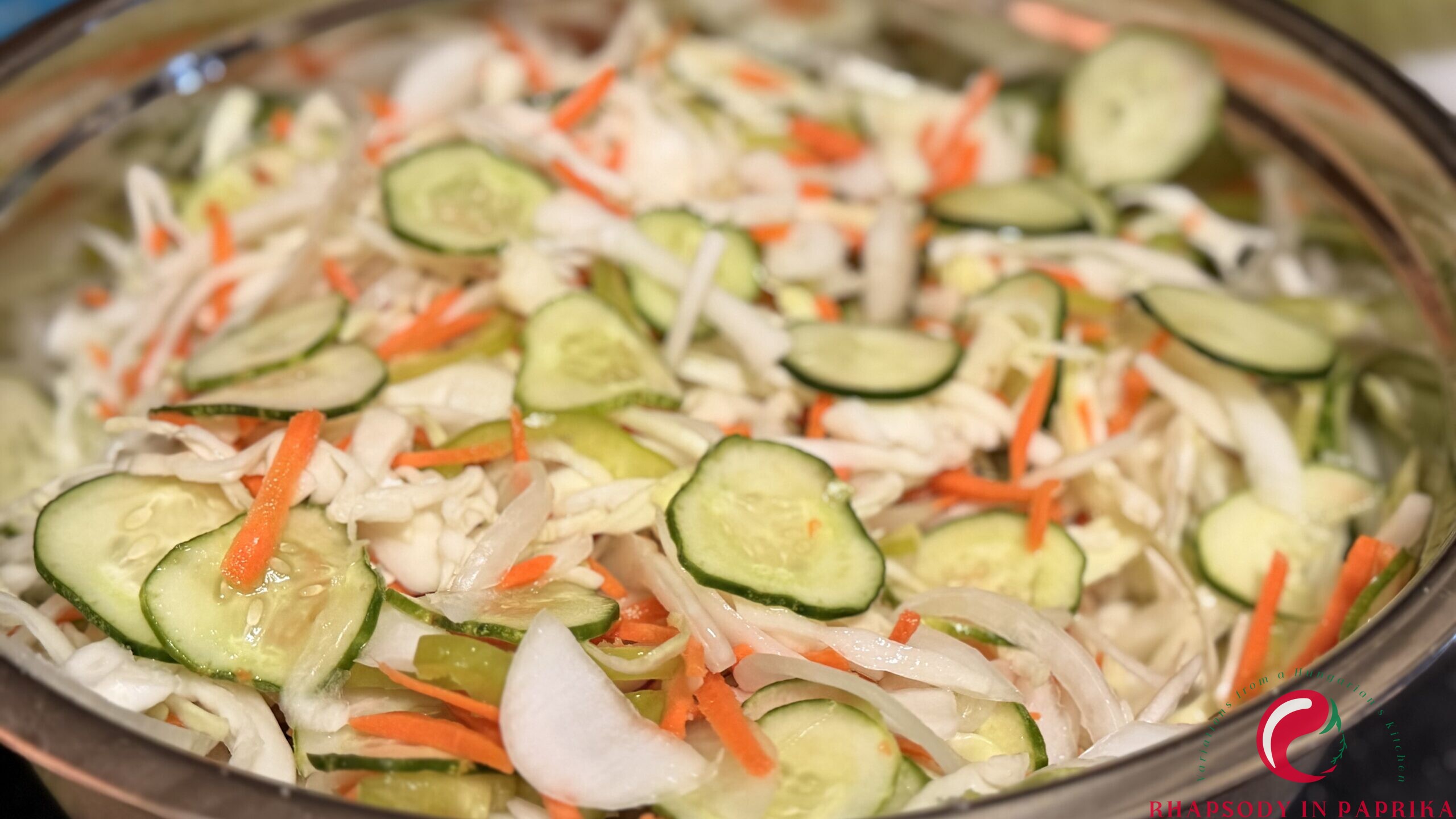
Sprinkle the vegetables with 1 tablespoon of salt and toss everything together thoroughly.
Let the vegetables sit for about 2-3 hours. The salt will draw out some of their natural moisture and help keep the finished csalamádé crisp.
After resting, gently squeeze out some of the excess liquid.
In a saucepan, combine the vinegar, water, sugar, salt, peppercorns, mustard seeds, and caraway seeds and/or bay leaves.
Bring the mixture to a gentle simmer, stirring until the sugar dissolved. Add half a teaspoon of natrium-benzoate for preserving - this is optional. As long as you keep the vinegar at 5% the salt and the acidity will preserve the vegetables properly.
Remove from the heat and allow the brine to cool slightly. This is so that the cooling liquid still creates a vacuum in the closed jar but the vegetables are not cooking in the hot brine and turn soft.
I usually wash the jars and lids in hot water and natrium benzoate and drip dry it.
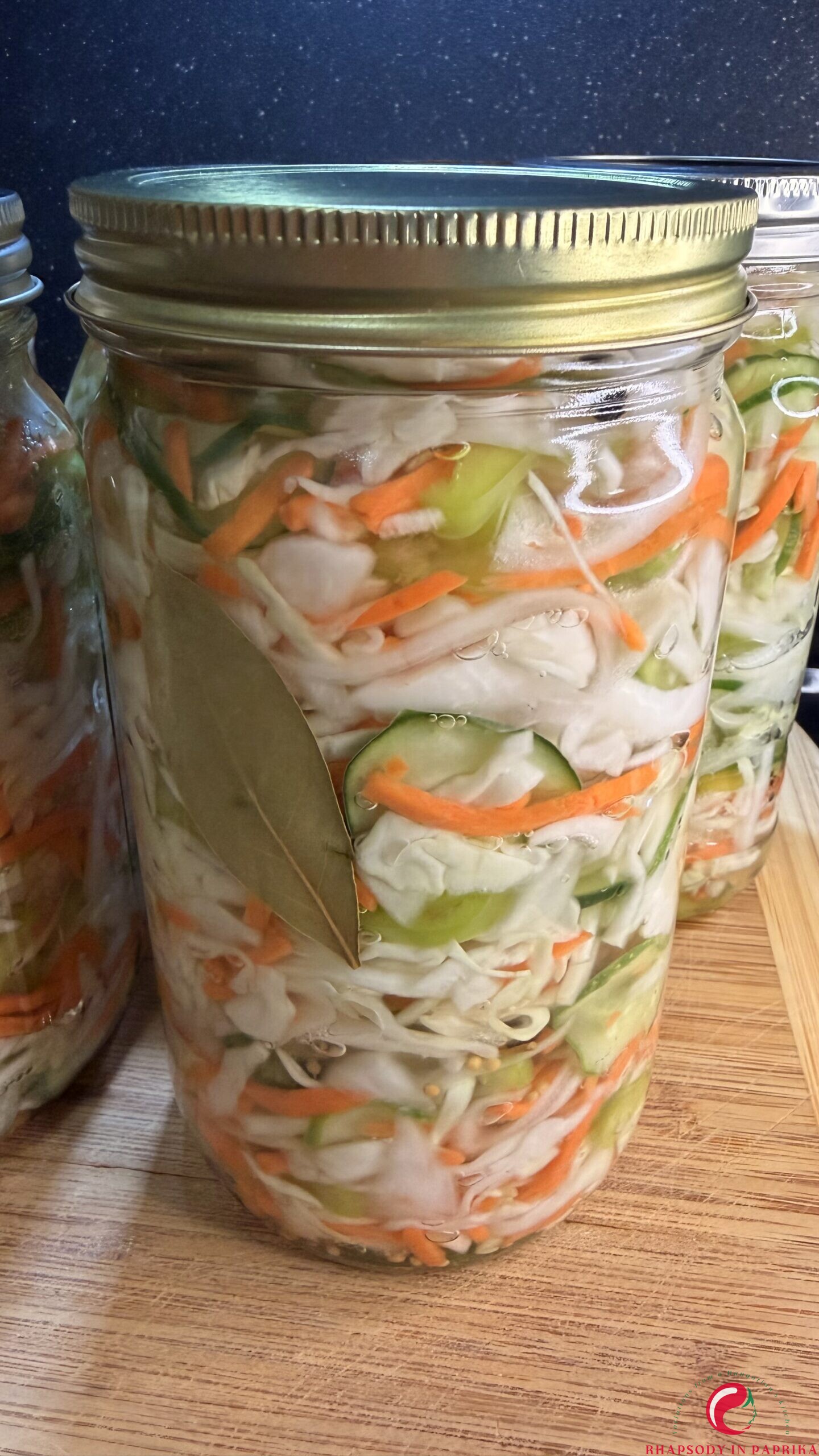
Pack the prepared vegetables into clean jars. Don't press them down too aggressively, but make sure the jars are filled evenly with a colorful mixture of vegetables.
Pour the brine over the vegetables, making sure they are completely covered.
Seal the jars and let them cool. I usually cover them with a blanket or a few layers of dishtowels to slow the cooling.
While csalamádé can be enjoyed after a couple of days, I think it becomes much better after one to two weeks, when the vegetables have had time to absorb the sweet and tangy flavors of the brine.
While you can store these in the fridge, if the lids are airtight, they will be shelf stable.
Thin, even slices are one of the secrets to a good csalamádé. They allow the vegetables to pickle evenly and make the mixture easier to serve alongside a meal.
Don't cook the vegetables. Csalamádé should retain a pleasant crunch.
The salt-resting step helps draw out excess moisture while preserving the texture of the vegetables.
Hungarian csalamádé usually has a noticeable sweet-and-sour flavor. However, everyone's preference is different.
If you prefer a sharper pickle, reduce the sugar slightly. If you enjoy a sweeter version, you can add a little more.
The important thing is finding a balance that works for you.
If available, use peppers in different colors. The finished jars will look beautiful, and the variety makes the mixture especially appealing on the table.
Freshly made csalamádé is good, but patience makes it better. The flavor develops significantly after the vegetables have spent several days in the brine.
Welcome to my kitchen, where Hungarian tradition, cherished childhood memories, and a love of good food come together. I was born in the rolling hills of Northeast Hungary and grew up surrounded by the flavors, stories, and traditions passed down through my family. From weekends spent in our garden and wandering the countryside with my mother to long afternoons cooking and baking together, food has always been one of the ways I connect. After moving to Western Pennsylvania, I found myself missing the bold, comforting flavors I grew up with, so I began recreating the dishes of my childhood and discovering new ways to bring those flavors to my kitchen. Today, I share these recipes with you—traditional Hungarian favorites, family treasures, and dishes inspired by the many cuisines that have become part of my life—so you can enjoy a little taste of Hungary wherever you call home.
Thank you so much for stopping by and spending a little time with me here. I hope you find a recipe that brings a taste of Hungary to your kitchen and a few happy memories to your table.


