
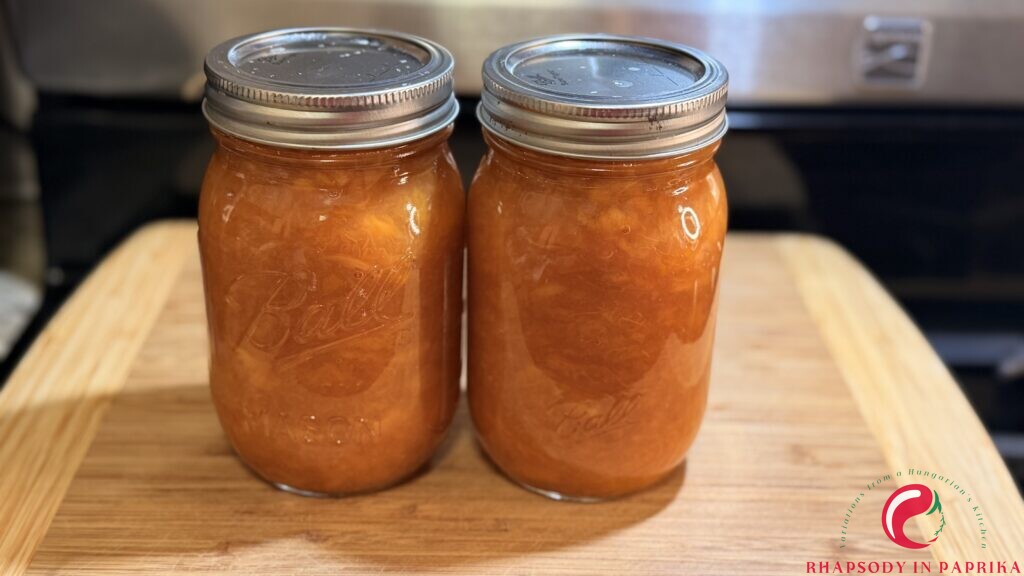
Baracklekvár, or Hungarian peach jam, is one of those recipes that takes me straight back to my childhood. I remember late summer days in our weekend garden, when the peach trees were heavy with ripe fruit and my mother would begin preparing for the winter months ahead.
As a young girl, I loved helping my mother make the jam. My job was to help clean the peaches, cut them in half, and remove the pits. The peaches were so soft, sweet, and juicy that the work itself felt like a treat. Of course, I would always manage to eat a few along the way!
Hungarian peaches are something special. They are incredibly soft and juicy, with a deep sweetness and a wonderful peach aroma that fills the kitchen when they are cooked. When my mother made baracklekvár, the whole house seemed to smell of summer.
After I moved to America, one of the things I missed most was the flavor of those peaches. I searched grocery stores for something similar, but for many years I couldn't find peaches that reminded me of the ones I grew up eating. I had heard that Georgia peaches were wonderfully sweet and juicy, but living in Pennsylvania, Georgia peaches aren't exactly something I can simply pick up locally whenever I want.
Then I discovered Soergel Orchards in the North Hills of Pittsburgh.
Their peaches brought back some of those childhood memories for me. Soergel's is a family farm and market in Wexford, and their peach season is one I look forward to every summer. They offer fresh peaches during the season, and their harvest schedule places peaches among the summer crops.
When July comes around, I start thinking about making baracklekvár again. It is a wonderful time to buy peaches in larger quantities and turn that beautiful summer fruit into something that can be enjoyed long after peach season has disappeared.
Making peach jam is more than just preserving fruit for me. It is a way of preserving a little piece of my childhood, too. When I stand in the kitchen preparing the peaches, I can still picture my mother beside me, showing me how to remove the pits and prepare the fruit for the big pot.
This is the baracklekvár I make to capture that taste of summer—the sweet, fragrant flavor of ripe peaches that reminds me of Hungary, our weekend garden, and those long summer days spent cooking with my mother. Note that you can make this same jam with apricots (kajszibarack; sárgabarack lekvár) as well.
Baracklekvár, or Hungarian peach jam, is one of those recipes that takes me straight back to my childhood. I remember late summer days in our weekend garden, when the peach trees were heavy with ripe fruit and my mother would begin preparing for the winter months ahead.
This is the recipe for the baracklekvár I make to capture that taste of summer—the sweet, fragrant flavor of ripe peaches that reminds me of Hungary, our weekend garden, and those long summer days spent cooking with my mother.
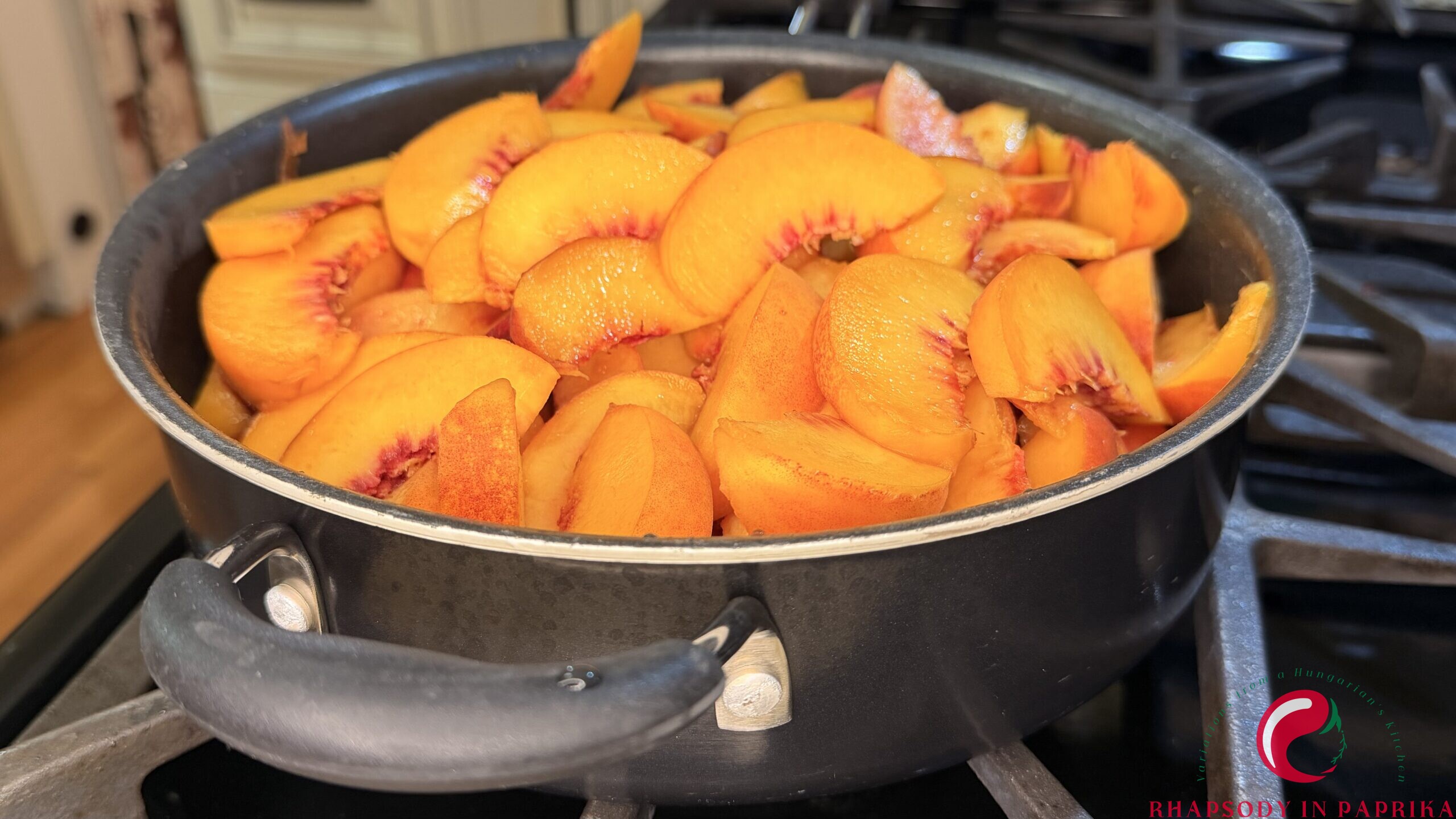
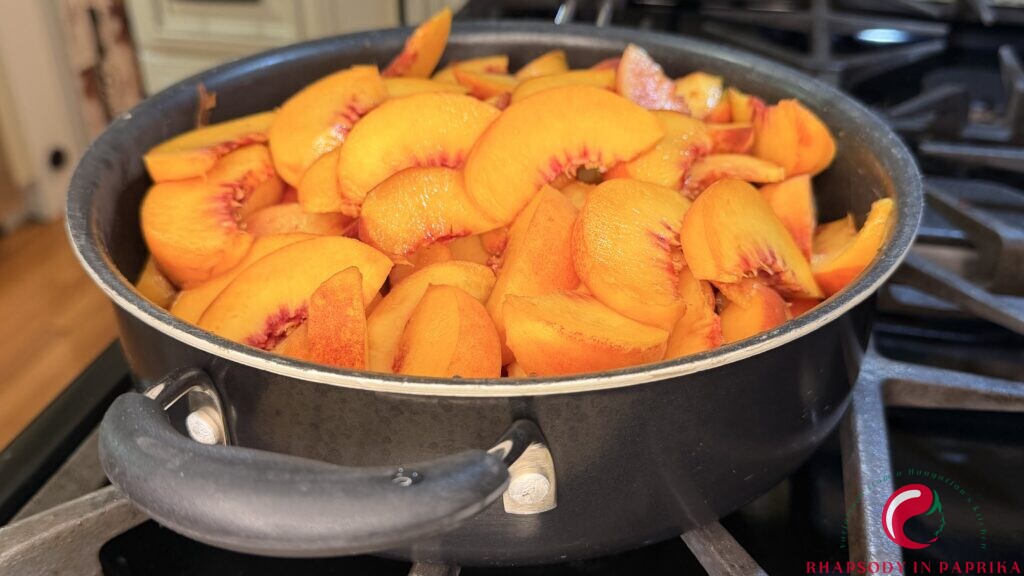
Wash the peaches well, then cut them in half and remove the pits. If the peaches are ripe and soft, I prefer to leave the skin on, but if you prefer a smoother, more delicate jam, you can remove them.
Cut the peaches into smaller slices and place them in a large, heavy-bottomed pot. This pot will prevent the jam from burning on the bottom.
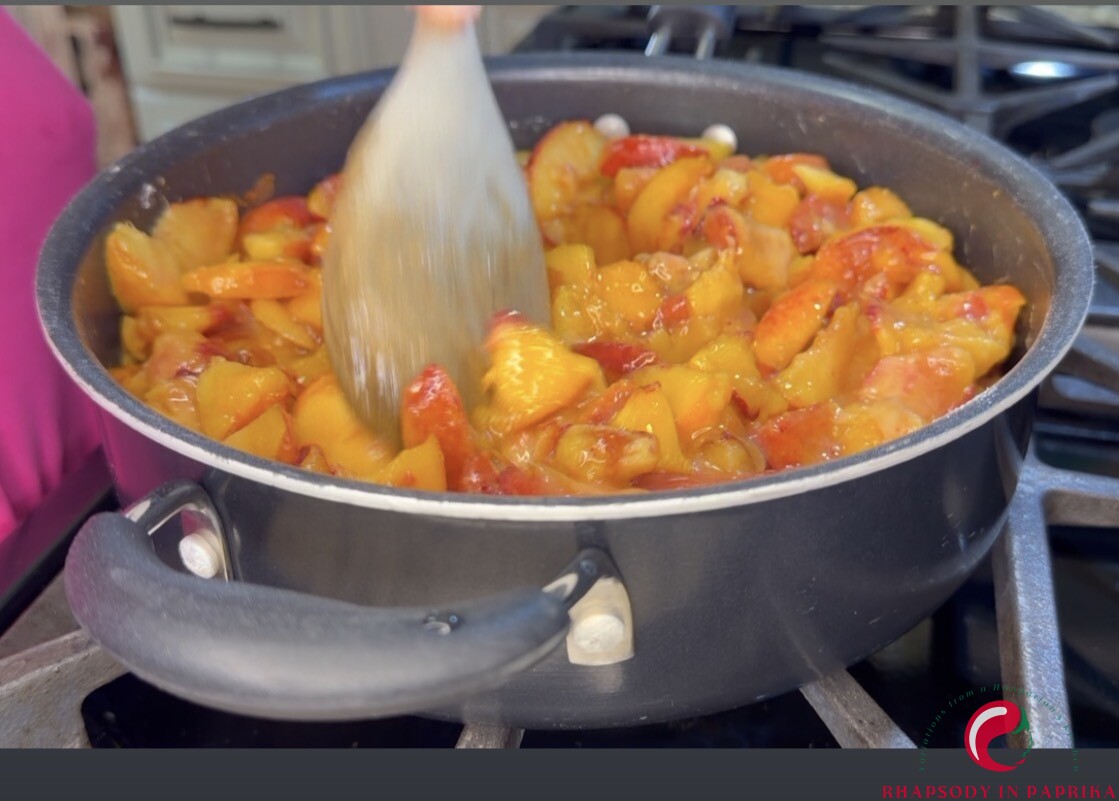
Place the peaches over medium heat and let them begin to cook slowly. As they warm, they will release their beautiful juices and gradually soften.
Stir often, especially as the mixture thickens, so the fruit does not stick to the bottom of the pot. As it softens, keep cutting the peach slices into smaller pieces with your spoon.
There is something wonderful about this part of making baracklekvár. The kitchen starts to smell like a summer orchard, and I am immediately reminded of standing beside my mother, helping her prepare peaches for the winter.
Once the peaches have softened, add the sugar.
I don't like making peach jam overly sweet. Good peaches are naturally so sweet and fragrant that they don't need a mountain of sugar. Start with less and taste as you go. You can always add more.
Continue cooking until the peaches have broken down and the jam has reached the consistency you like.
For a rustic jam, leave some small pieces of peach. For a smoother baracklekvár, use an immersion blender to blend the fruit.
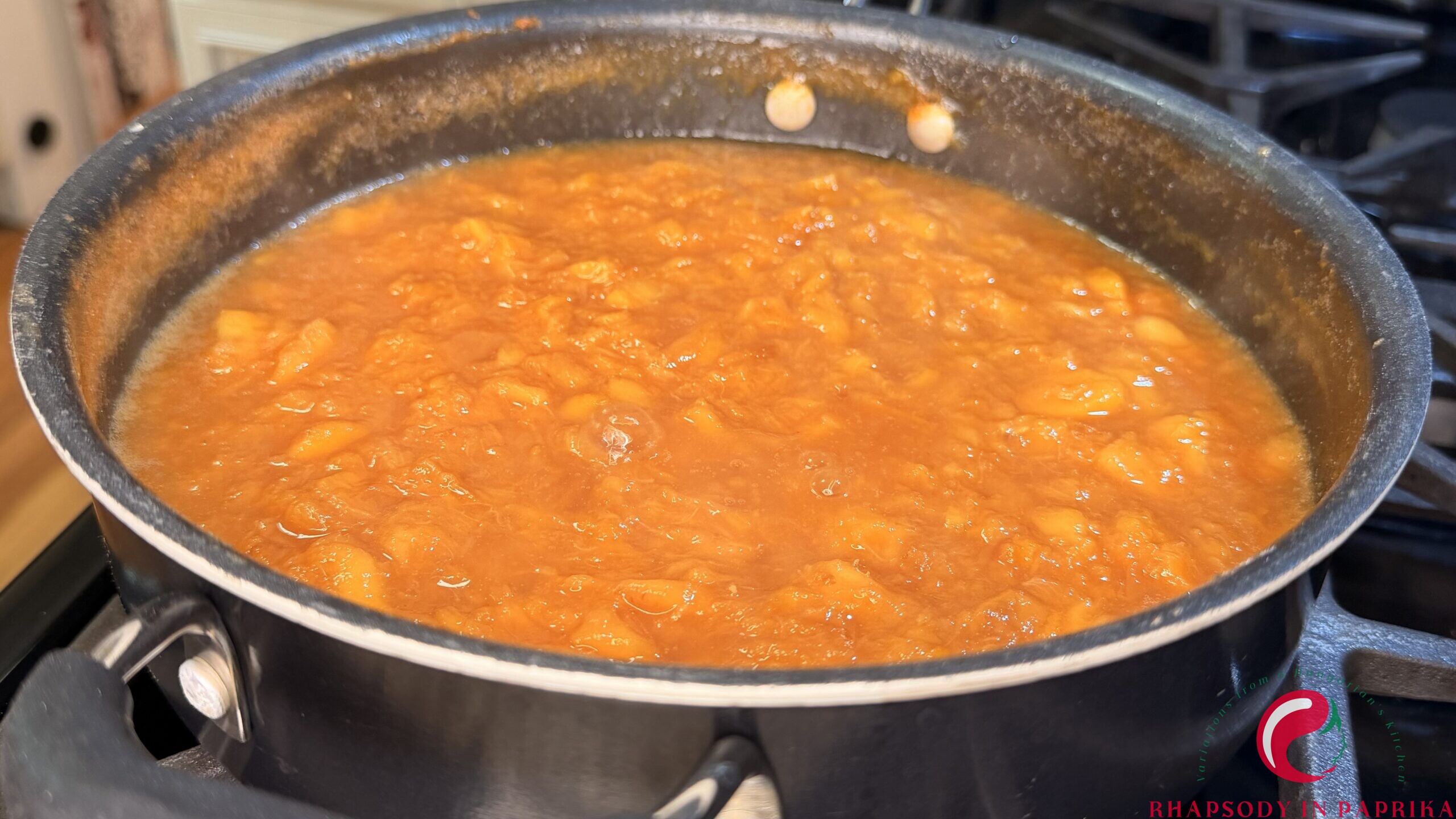
Continue simmering gently, stirring frequently, until the excess moisture has cooked away and the jam becomes thick and glossy.
Remember that the jam will become somewhat thicker as it cools, so don't cook it until it is completely stiff in the pot.
Once the jam has reached the desired consistency, remove it from the heat and stir in approximately ⅓ teaspoon of sodium benzoate.
Make sure the sodium benzoate is suitable for food use and follow the directions on the product label. Stir thoroughly so it is evenly distributed throughout the jam. (Note: Natrium benzoate dissolves in hot food)
(NOTE: The official word is that sodium benzoate does not replace proper canning or guarantee that the jam is shelf-stable. For long-term room-temperature storage, follow a tested water-bath canning method. Otherwise, store the jam in the refrigerator.)
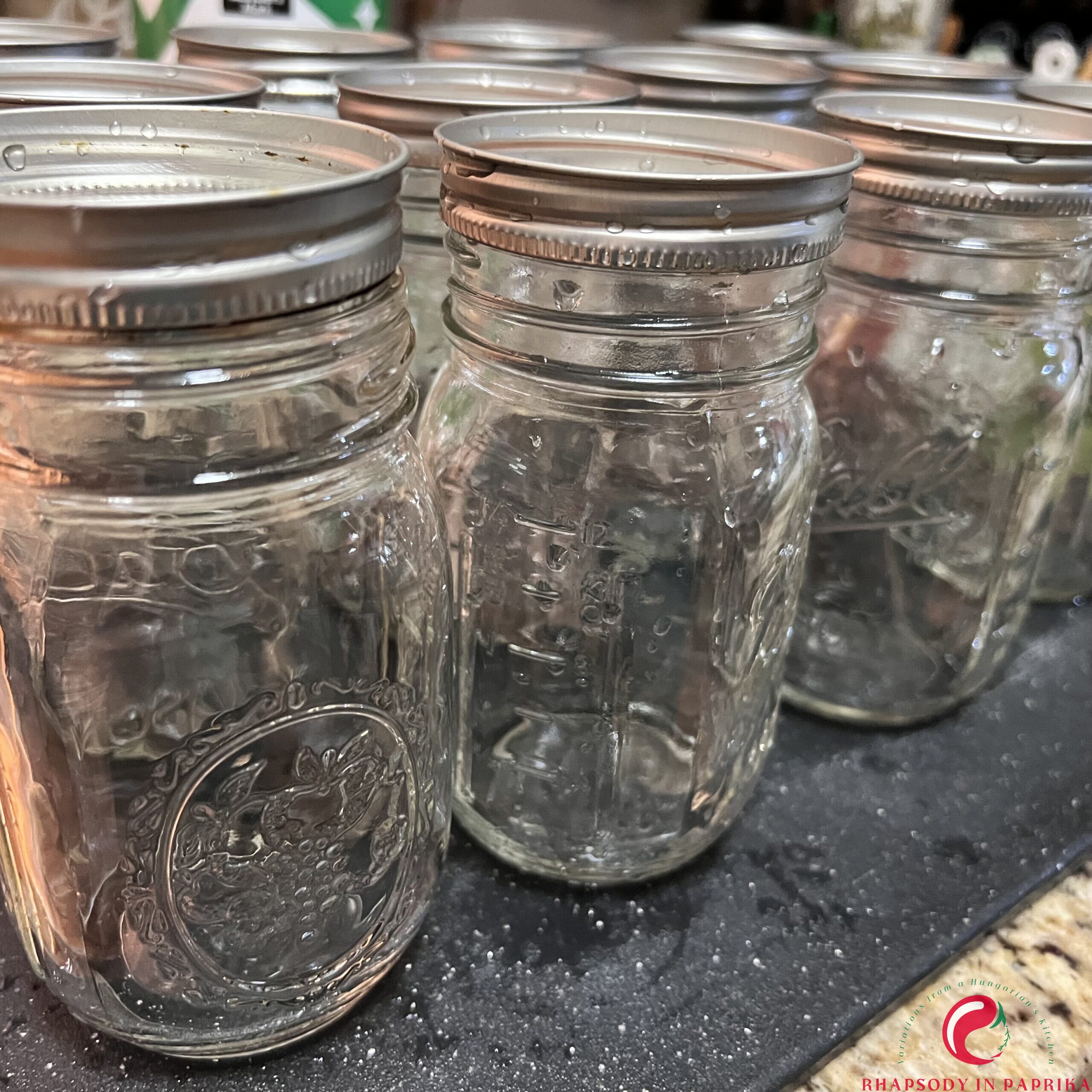
Wash the jars thoroughly with hot water. I also rinsed them with hot water containing a small amount of sodium benzoate. Alternatively, you can wash the mason jars on the hottest setting of your dishwasher.
For safe preservation, use clean canning/mason jars and prepare them according to current home-canning guidance.
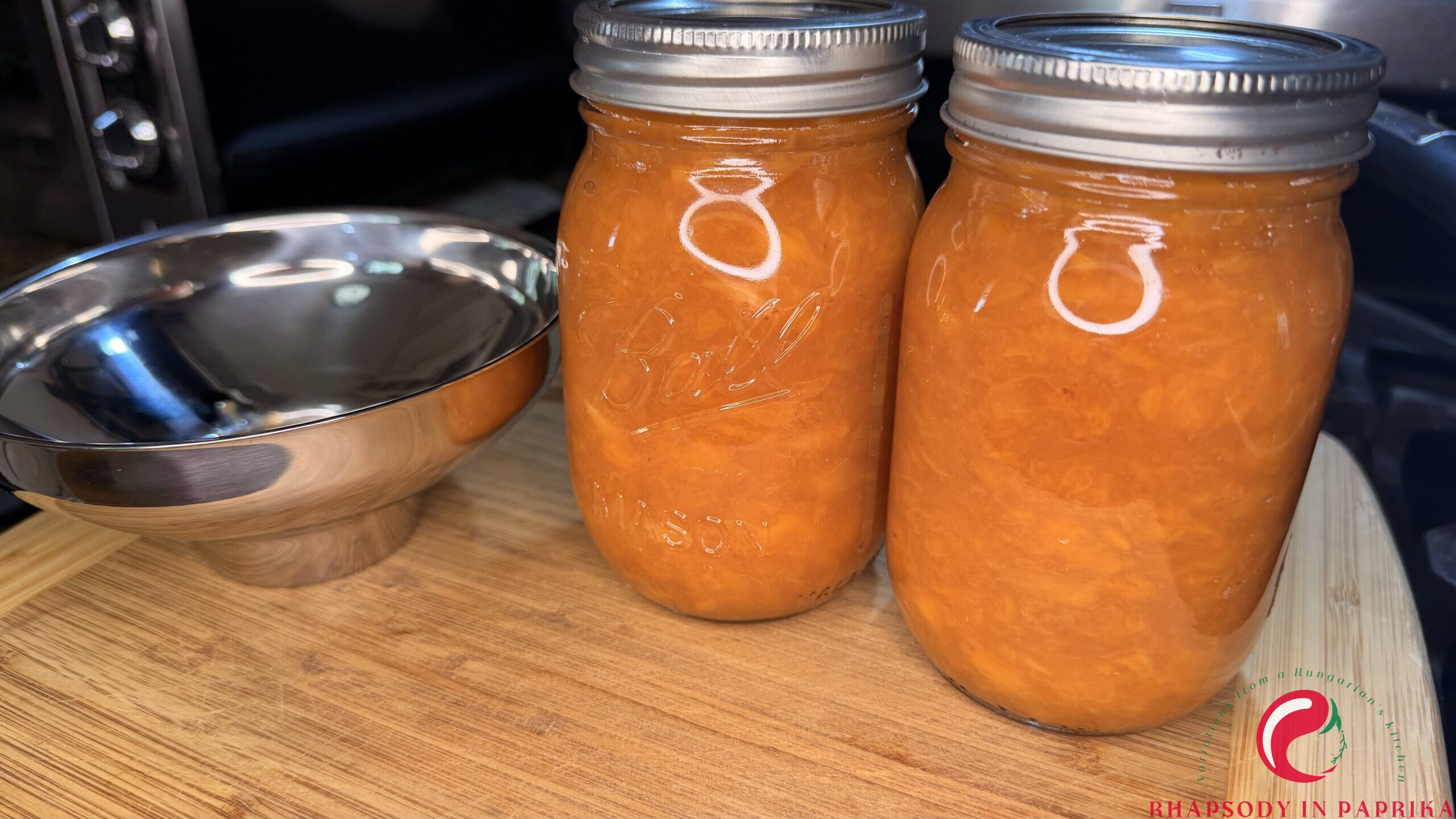
Ladle the hot jam into the prepared mason jars, leaving the appropriate headspace for your preservation method.
Wipe the rims clean and close the jars with clean, properly prepared lids.
If you are using a tested water-bath canning process, process the filled jars according to the instructions for that recipe, adjusting for altitude if necessary. If you are not processing the jars in a water-bath canner, allow them to cool and refrigerate them.
Label the jars with the date.
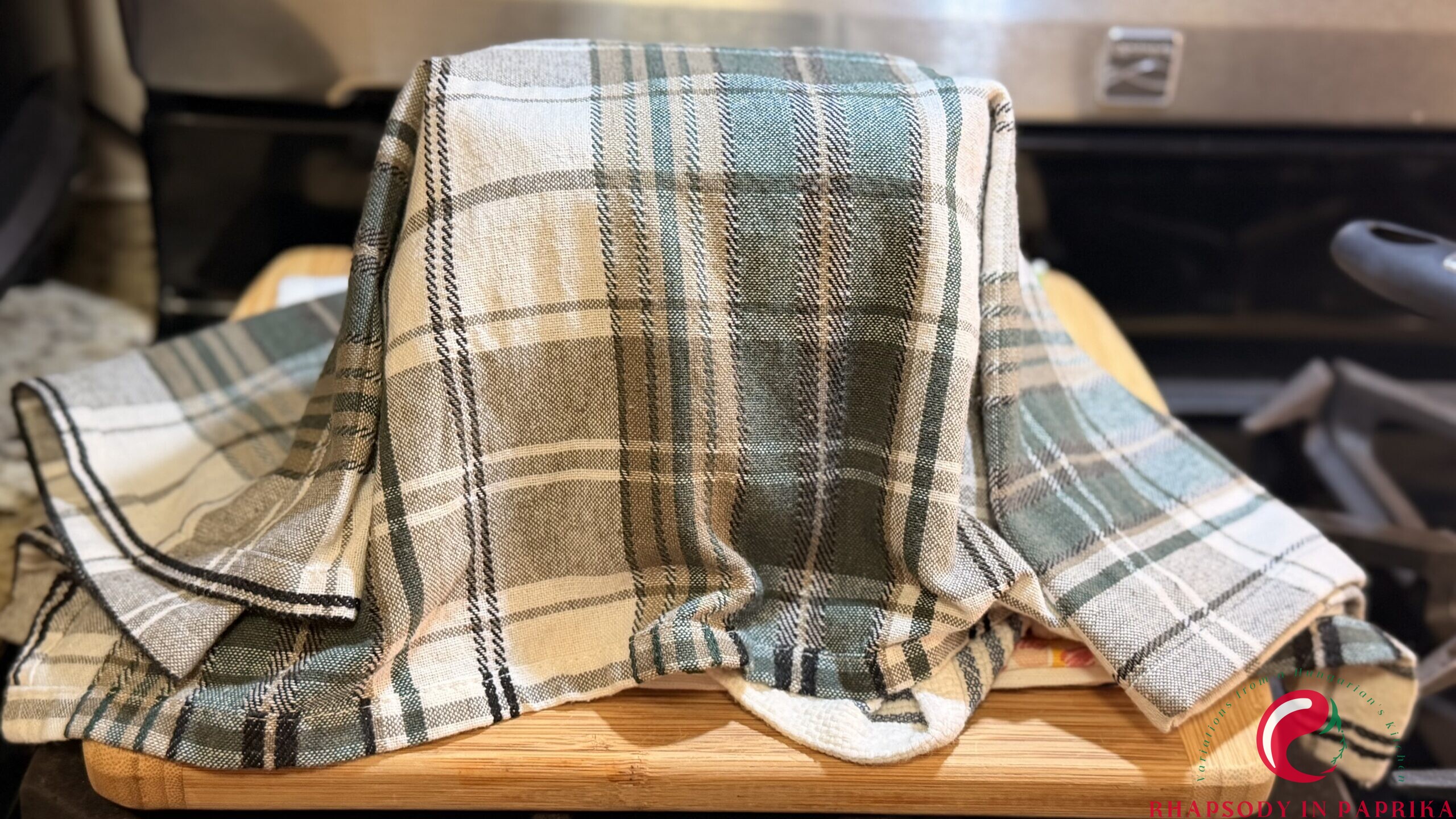
While the jars are still hot, pack them close to each other, and cover them with towels or a blanket. This will allow them to further cook a little and cool gradually. You can store them the following day when the jars are all cold.
Welcome to my kitchen, where Hungarian tradition, cherished childhood memories, and a love of good food come together. I was born in the rolling hills of Northeast Hungary and grew up surrounded by the flavors, stories, and traditions passed down through my family. From weekends spent in our garden and wandering the countryside with my mother to long afternoons cooking and baking together, food has always been one of the ways I connect. After moving to Western Pennsylvania, I found myself missing the bold, comforting flavors I grew up with, so I began recreating the dishes of my childhood and discovering new ways to bring those flavors to my kitchen. Today, I share these recipes with you—traditional Hungarian favorites, family treasures, and dishes inspired by the many cuisines that have become part of my life—so you can enjoy a little taste of Hungary wherever you call home.
Thank you so much for stopping by and spending a little time with me here. I hope you find a recipe that brings a taste of Hungary to your kitchen and a few happy memories to your table.


