
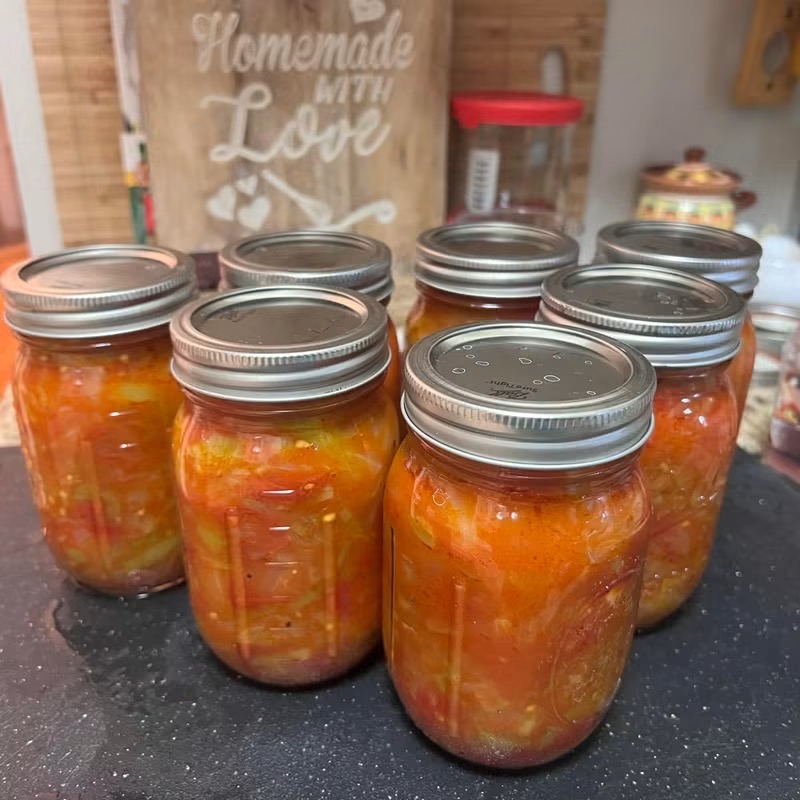

Lecsó is one of those Hungarian dishes that reminds me of summer in Hungary. It is humble, rustic, and incredibly flavorful, made with just a handful of vegetables and a few simple seasonings. There is no need for a long list of ingredients. When the tomatoes and peppers are ripe and flavorful, they do most of the work.
Traditionally, lecsó is cooked slowly enough for the onions, peppers, and tomatoes to soften and release their flavors into one another. The Hungarian paprika adds its characteristic color and warmth, while a little sugar helps balance the acidity of the tomatoes.
For me, the key to a good lecsó is not rushing the vegetables. The onions should become soft and sweet, the peppers tender, and the tomatoes should cook down into a rich, almost saucy consistency while still retaining some of their character.
In the fall I always can 10-15 small jars that lasts us through the winter. We use it with scrambled eggs, stews or just by itself.
Lecsó is one of those Hungarian dishes that reminds me of summer in Hungary. It is humble, rustic, and incredibly flavorful, made with just a handful of vegetables and a few simple seasonings. There is no need for a long list of ingredients. When the tomatoes and peppers are ripe and flavorful, they do most of the work.
Traditionally, lecsó is cooked slowly enough for the onions, peppers, and tomatoes to soften and release their flavors into one another. The Hungarian paprika adds its characteristic color and warmth, while a little sugar helps balance the acidity of the tomatoes.
For me, the key to a good lecsó is not rushing the vegetables. The onions should become soft and sweet, the peppers tender, and the tomatoes should cook down into a rich, almost saucy consistency while still retaining some of their character.
Wash and prepare all of the vegetables before you begin cooking. Slice the onions into thin slices, cut the peppers into rings or strips, and roughly chop the tomatoes.
There is no need to make everything perfectly uniform. Lecsó is a rustic dish, and I actually prefer seeing the different vegetables in the finished dish.
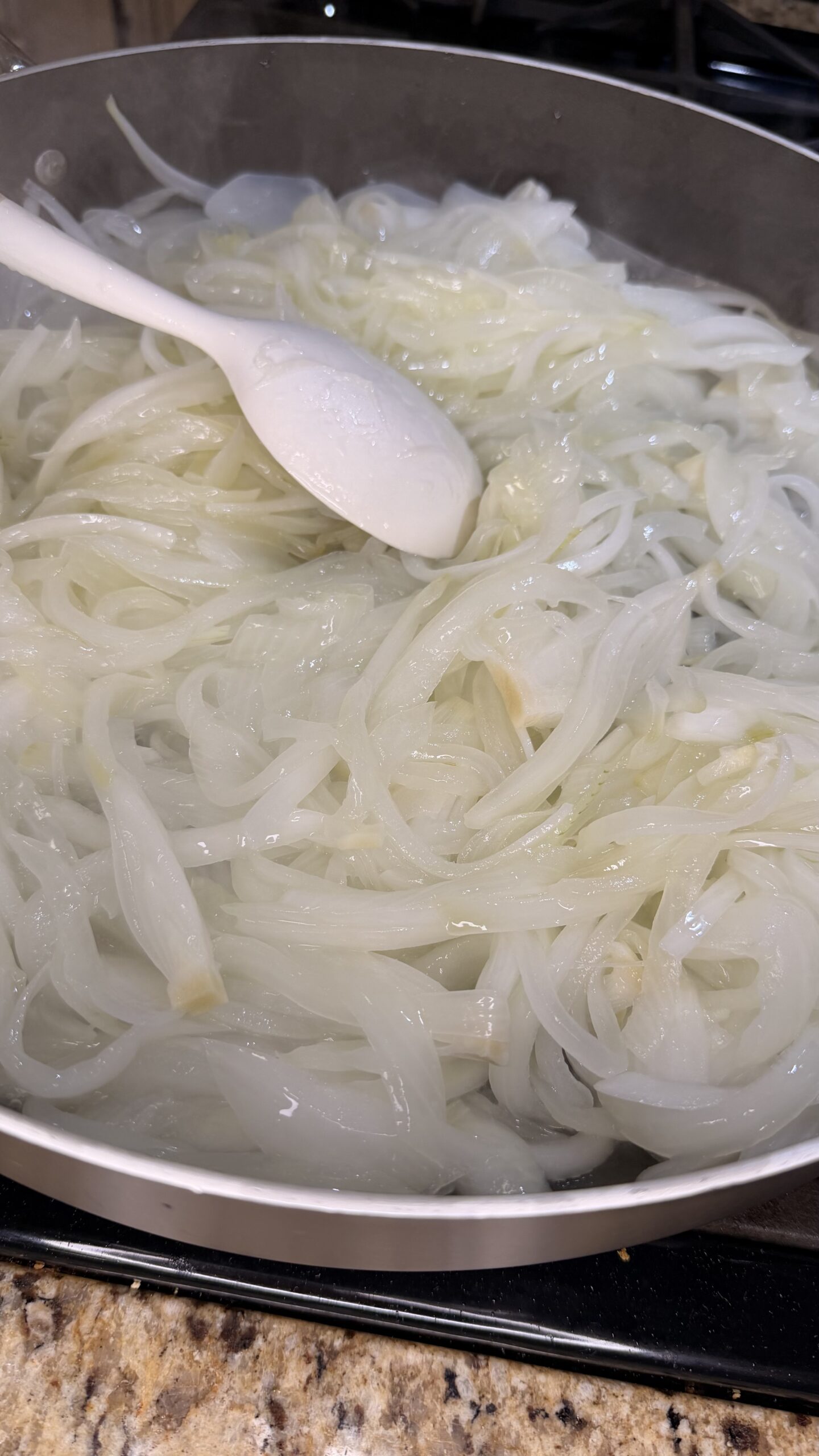
Heat the lard in a large, heavy-bottomed pot or Dutch oven over medium heat. Add the sliced onions and a pinch of salt.
Sautee the onions slowly, stirring occasionally, until they become soft and translucent. You want them white, tender and sweet. Do not let them brown. If you need to, add a dash of water.
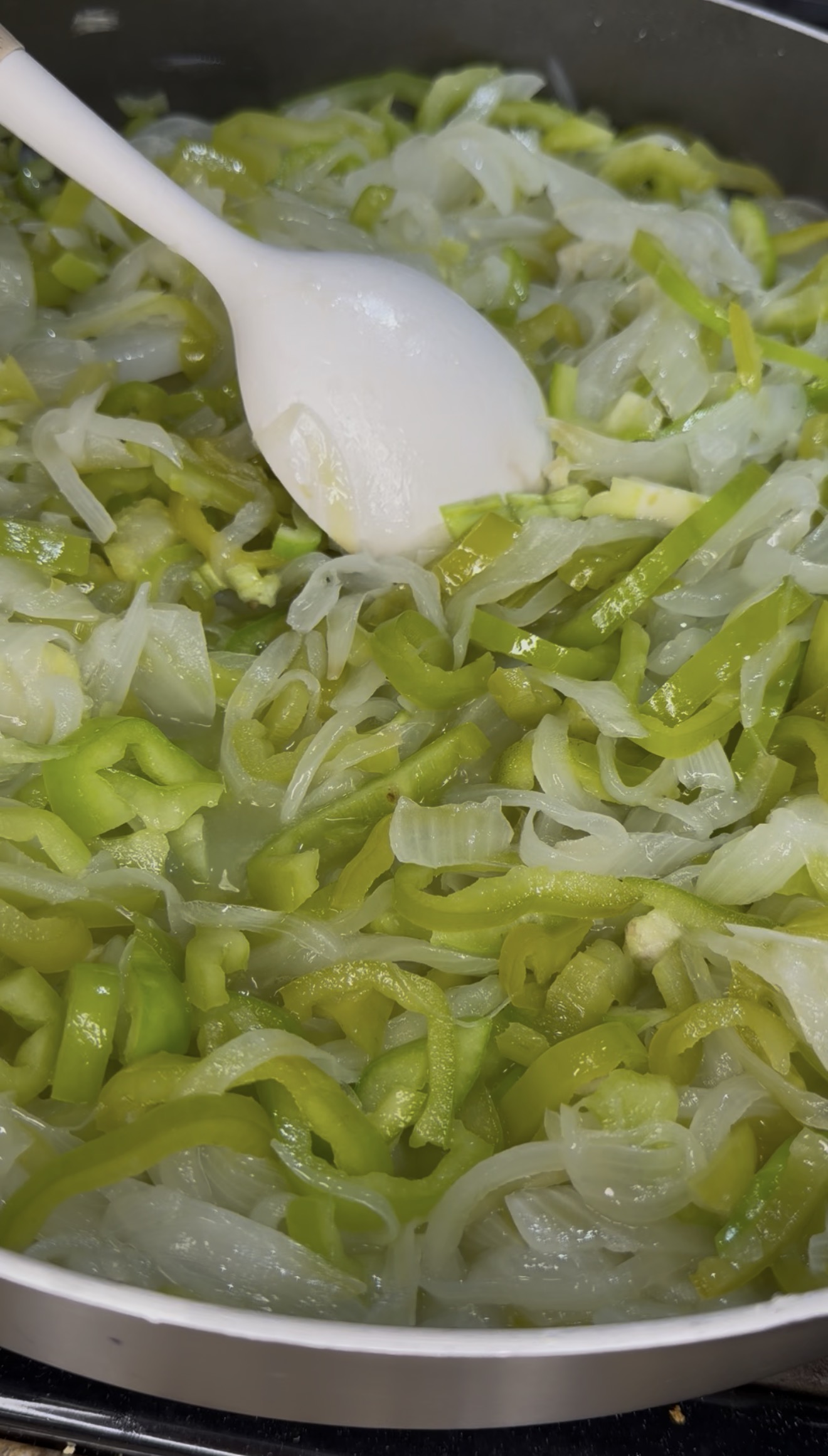
Add the sliced peppers. Mix it well with the onions. Sautee the peppers.
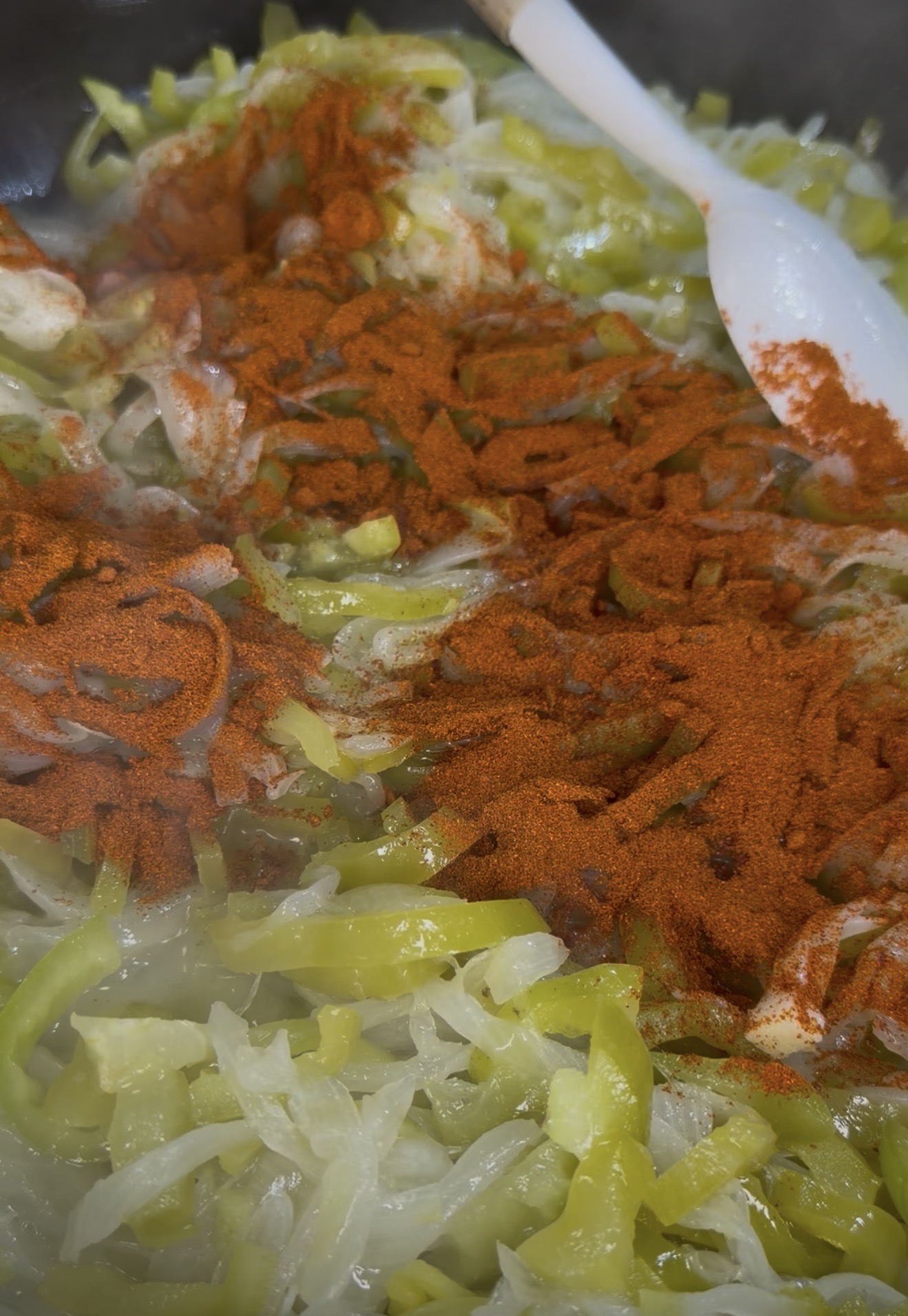
Remove the pot from the heat for a moment before adding the Hungarian paprika. Stir it into the onions and lard.
This little step is important. Hungarian paprika can become bitter if it is fried over high heat, so I prefer adding it away from direct heat and letting the residual warmth release its beautiful color and aroma.
Stir the pepper and onion well so they become coated with the paprika-infused onions and lard.
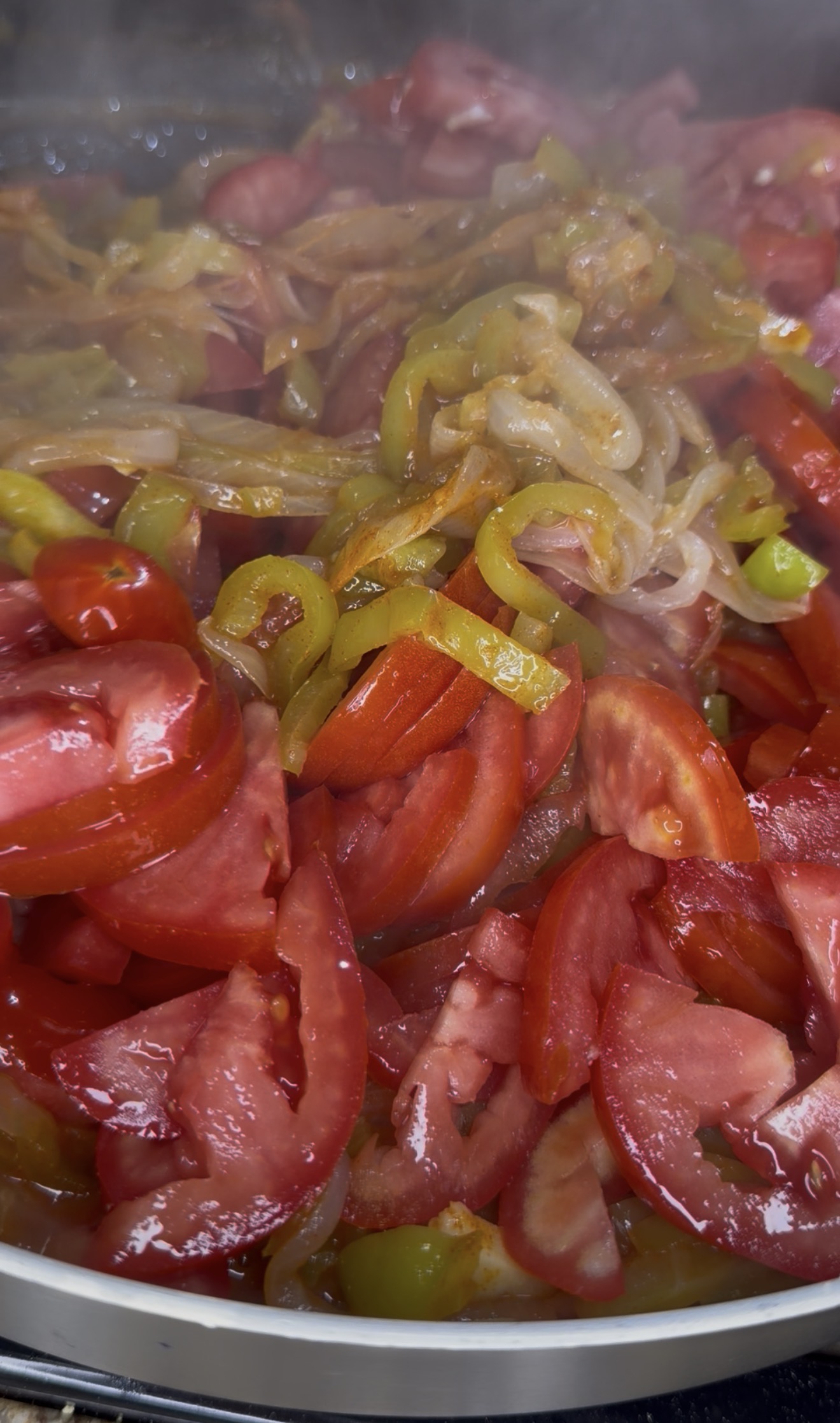
Add the chopped tomatoes and season with salt and black pepper.
Stir everything together and bring the mixture to a gentle simmer. The tomatoes will release quite a bit of liquid as they cook, creating the flavorful sauce that makes lecsó so satisfying.
Reduce the heat and let the lecsó simmer gently, uncovered, until the onions and peppers are completely tender and the tomatoes have cooked down.
Stir occasionally and taste as it cooks.
The exact cooking time can vary depending on how juicy the tomatoes are and how soft you like your vegetables. I usually let the vegetables cook until they are tender and the flavors have had time to blend, but I don't cook them until they completely disappear.
Taste the lecsó toward the end of cooking. Add additional salt or pepper if needed. It should have a sweet and sour savory flavor.
If your tomatoes are particularly acidic, add a very small amount of sugar and taste again. The sugar should not make the dish sweet. Its purpose is simply to bring the tomato flavor into balance. Similarly, if your tomatoes were sweet but not acidic, add a little bit of vinegar.
Each time mix and let the flavors blend before adding more.
Serve warm with fresh bread or enjoy it as a side dish or a light main course.
If you are planning to can the lecsó, add a tip of a tbs of natrium benzoit to the stew. This is optional.
Fill a large container with hot water add half a teaspoonful natrium benzoate and wash the jars and lids well inside out.
Once this step is done, use a jar funnel to spoon the stew into the jars.
Close the lid tightly and cover the jars with a blanket or towel and allow them to cool slowly overnight before placing them on the shelf
Because there are so few ingredients in lecsó, the quality of the vegetables makes a tremendous difference. I prefer ripe, flavorful tomatoes with enough acidity to give the dish character.
If your tomatoes are bland, the finished lecsó will be bland as well.
Cubanelle peppers are one of my favorite choices because they have a wonderful balance of sweetness and mild pepper flavor. Their dark green color fades to yellow during cooking. White sweet banana peppers are another good option. Just make sure you do not accidentally pick up hot banana peppers
I would avoid substituting very hot peppers unless you specifically want a spicy lecsó. Traditional lecsó does not need heat from chili peppers to be flavorful.
Lard is a traditional Hungarian cooking fat and contributes a subtle richness that vegetable oil simply does not provide. With that said you can absolutely use vegetable oil.
You don't need to drown the vegetables in it. Just use enough to gently coat and sauté the onions and carry the paprika throughout the dish.
Hungarian paprika is one of the defining flavors of lecsó, but it should not be burned. Take the pot off the heat before stirring the paprika into the onions and lard.
A little care here makes a noticeable difference in the finished dish.
Lecsó is not a dish that benefits from rushing. Give the onions, peppers, and tomatoes enough time to soften and release their flavors.
I find that the longer the vegetables gently cook together, the more harmonious the finished dish becomes. With that said, do not let the vegetable to cook into mush.
I always recommend waiting until the end before adding sugar or vinegar. Some tomatoes are naturally sweet, while others are quite acidic.
The goal is balance, not sweetness. Add just enough to soften excessive acidity.
There are many versions of lecsó, and people often add other ingredients such as sausage, bacon, eggs, or rice. I also use it in some stews. Those can all be delicious.
Sometimes the simplest version is the best way to appreciate a traditional dish.
Welcome to my kitchen, where Hungarian tradition, cherished childhood memories, and a love of good food come together. I was born in the rolling hills of Northeast Hungary and grew up surrounded by the flavors, stories, and traditions passed down through my family. From weekends spent in our garden and wandering the countryside with my mother to long afternoons cooking and baking together, food has always been one of the ways I connect. After moving to Western Pennsylvania, I found myself missing the bold, comforting flavors I grew up with, so I began recreating the dishes of my childhood and discovering new ways to bring those flavors to my kitchen. Today, I share these recipes with you—traditional Hungarian favorites, family treasures, and dishes inspired by the many cuisines that have become part of my life—so you can enjoy a little taste of Hungary wherever you call home.
Thank you so much for stopping by and spending a little time with me here. I hope you find a recipe that brings a taste of Hungary to your kitchen and a few happy memories to your table.


