
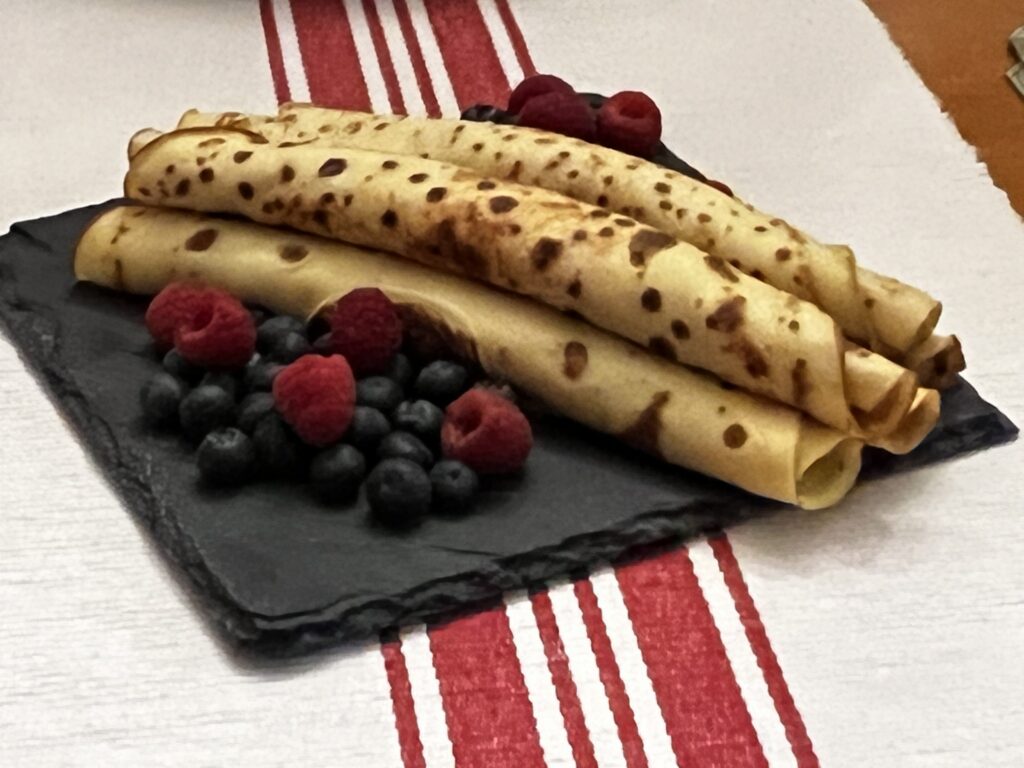
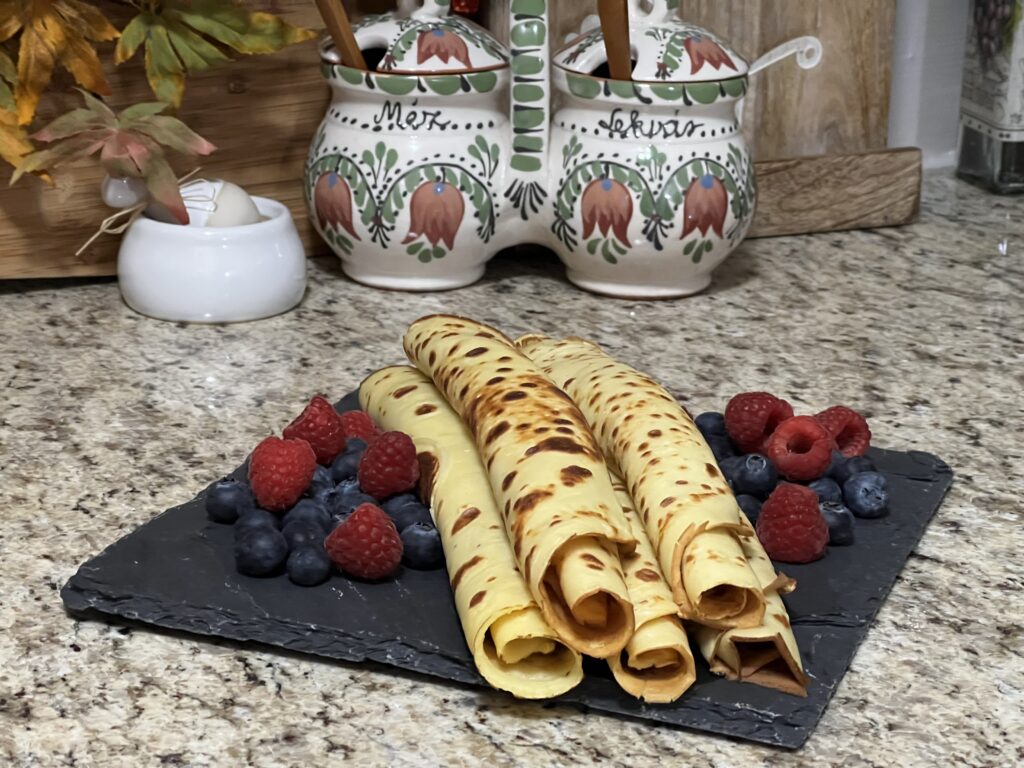
The best part was always choosing the filling. Some loved the sweet farmer’s cheese, some reached for the cocoa powder, and others insisted that jam or walnut was the only way to enjoy a proper palacsinta. However you fill them, they bring a little taste of home. You can find the various type of popular fillings we use in Hungary here.
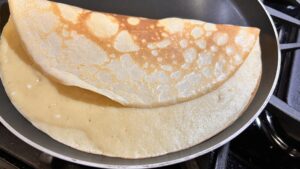
The batter comes together quickly and should be thin enough to spread into a delicate, even layer across the pan. Each palacsinta is cooked until lightly golden around the edges, with just enough color to give it a subtle toasted flavor while keeping the center soft and tender. A hot, lightly greased skillet is all you need; once you get into the rhythm of swirling, flipping, and stacking, the process goes surprisingly fast.
Palacsinta are wonderfully versatile and can be filled while still warm, then rolled, folded, or layered depending on the filling. Dust them with powdered sugar for a simple finish, or add a spoonful of jam, sweetened farmer’s cheese, ground walnuts, or cocoa for a more traditional Hungarian treat. They are best served warm, when the crepes are at their softest and the filling feels like part of every bite.
In a large bowl, beat the eggs well. Slowly add the milk, then gradually whisk in the flour until the batter is smooth and thin.
The batter should be the consistency of light cream—thin enough to spread easily when the pan is swirled. If needed, add a little more milk to reach the right consistency.
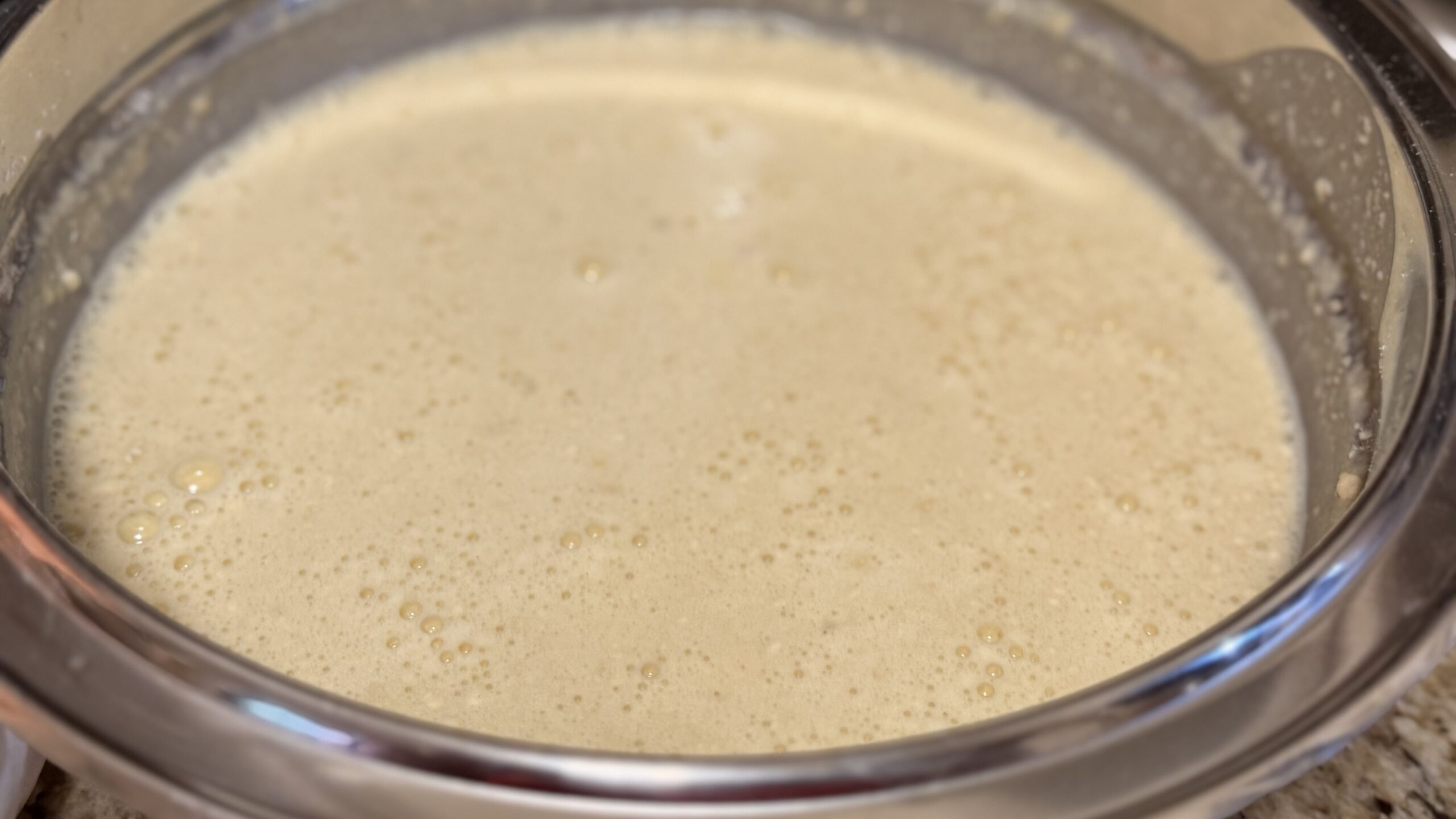
Let the batter rest for 20–30 minutes. This small step helps create soft, tender crepes.
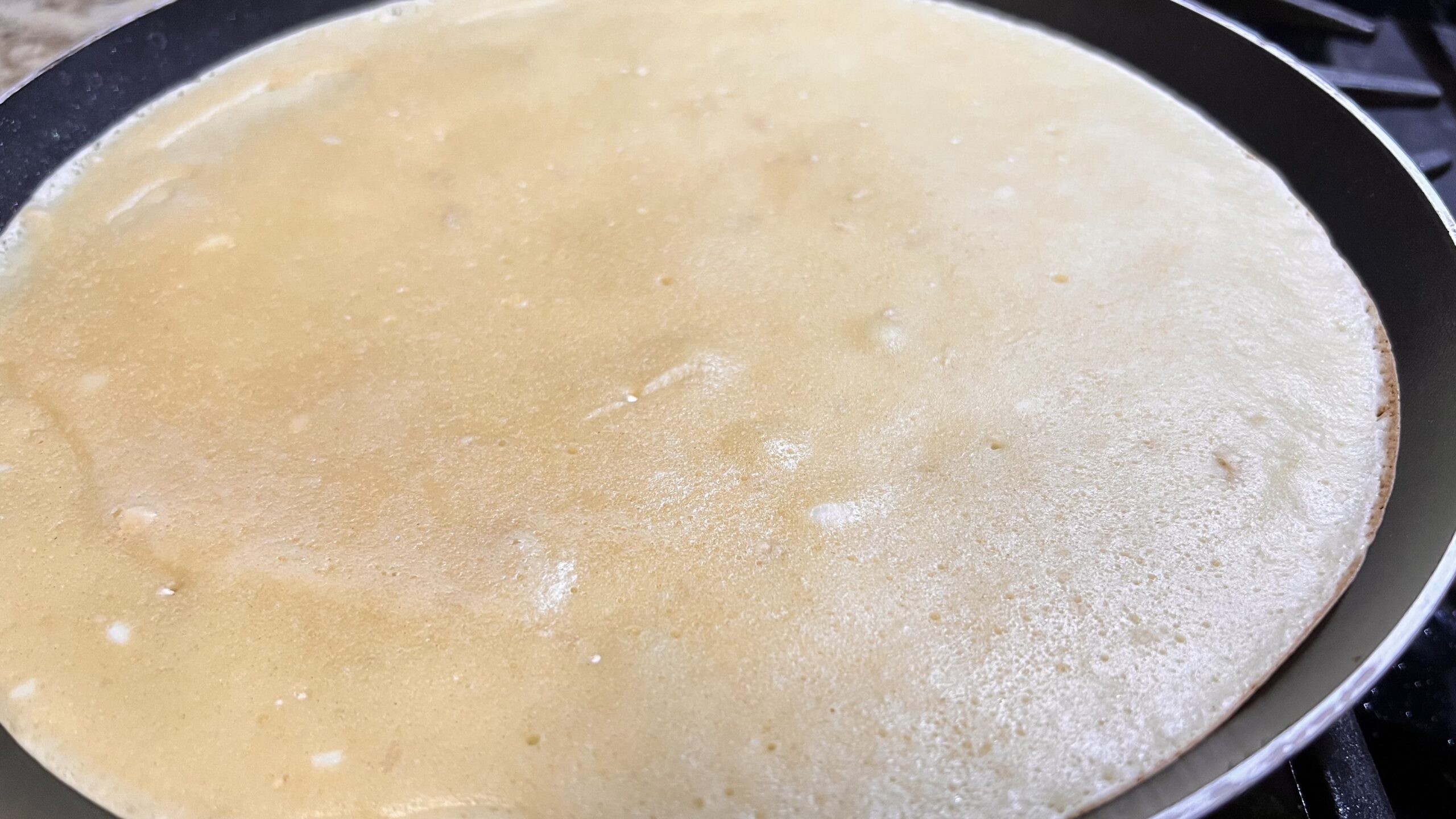
Heat a lightly buttered or oiled skillet over medium heat. Pour in a small amount of batter (about ¼ cup) and quickly swirl the pan so the batter spreads into a thin circle.
Cook until the edges begin to lift and the bottom is lightly golden. Flip and cook briefly on the other side.

Welcome to my kitchen, where Hungarian tradition, cherished childhood memories, and a love of good food come together. I was born in the rolling hills of Northeast Hungary and grew up surrounded by the flavors, stories, and traditions passed down through my family. From weekends spent in our garden and wandering the countryside with my mother to long afternoons cooking and baking together, food has always been one of the ways I connect. After moving to Western Pennsylvania, I found myself missing the bold, comforting flavors I grew up with, so I began recreating the dishes of my childhood and discovering new ways to bring those flavors to my kitchen. Today, I share these recipes with you—traditional Hungarian favorites, family treasures, and dishes inspired by the many cuisines that have become part of my life—so you can enjoy a little taste of Hungary wherever you call home.
Thank you so much for stopping by and spending a little time with me here. I hope you find a recipe that brings a taste of Hungary to your kitchen and a few happy memories to your table.


